
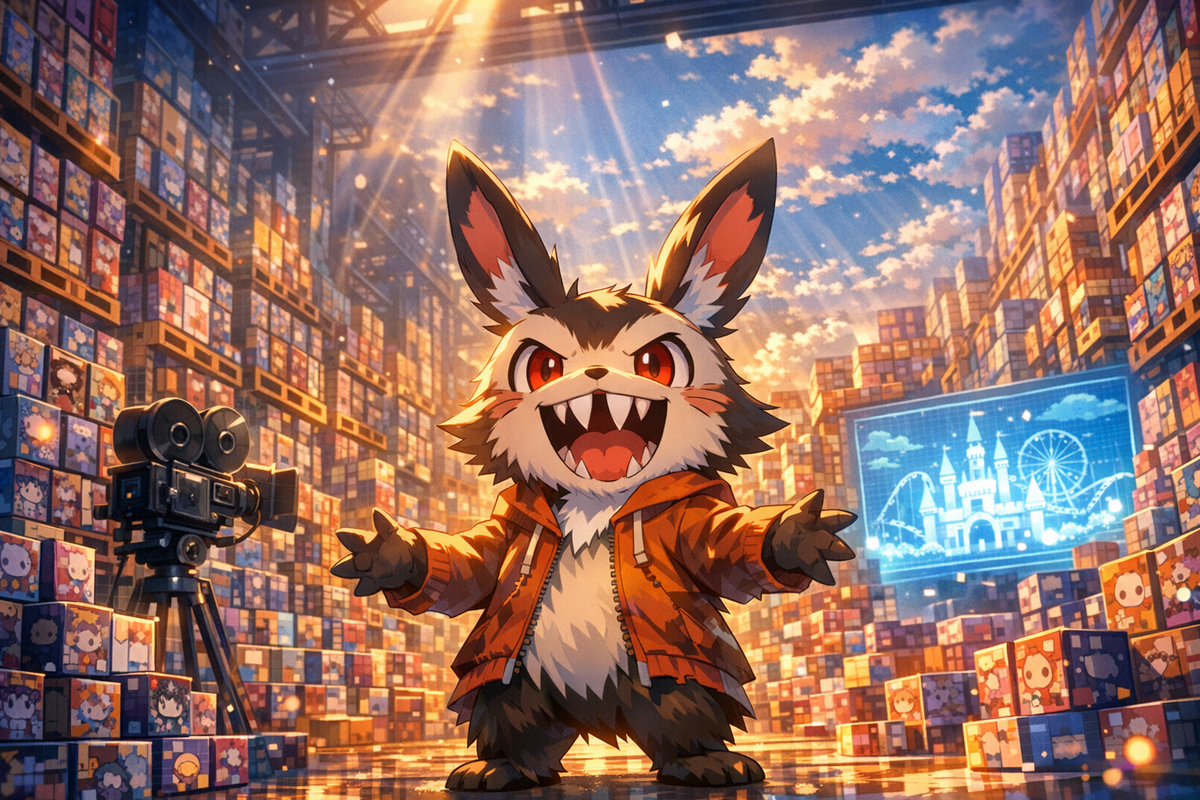
泡泡瑪特市值在2024年超越美泰兒——那個生產芭比娃娃七十年的玩具帝國。香港藝術家龍家昇(Kasing Lung)創作的Labubu,一隻長著兔耳、露出尖牙的醜萌生物,現在將由《柏靈頓》導演Paul King搬上大銀幕,索尼影業已簽約。這不是玩具公司跟風拍電影的老故事。這是一套完全逆向的IP建構邏輯在運作。
盲盒比故事更早存在
傳統IP產業有條鐵律:先有內容,再賣周邊。迪士尼拍完《冰雪奇緣》才賣艾莎娃娃,寶可夢播了動畫才做皮卡丘玩偶。但泡泡瑪特的路徑完全相反——Labubu在2019年推出時,沒有漫畫,沒有動畫,甚至沒有完整的世界觀設定。它只是The Monsters玩具宇宙裡的一個角色,靠著盲盒飢餓行銷和醜萌設計打開市場。
數字很直白:泡泡瑪特2023年營收突破人民幣63億元,海外市場佔比從2020年的1.3%跳到2023年的22.8%。Labubu系列在東南亞的銷售額年增長率超過300%。這些數字出現的時間點,都在任何影視內容誕生之前。玩具不是內容的衍生品,玩具本身就是IP的核心載體。
Paul King與家庭奇幻電影的商業算盤
找Paul King執導不是偶然。《柏靈頓》兩集全球票房合計5.62億美元,製作成本不到1億美元,這是索尼最愛的投資報酬率區間。King擅長的是把「外表怪異但內心溫暖」的角色塞進家庭冒險框架——一隻會說話的秘魯熊在倫敦找家,現在換成一隻長尖牙的兔耳生物在某個奇幻世界冒險。
索尼影業的劇本顯然參考了《小腳怪》(The Son of Bigfoot)路線:動物主角、親子關係、輕度冒險、全齡向市場。這不是藝術電影,這是「醜萌設計→盲盒飢餓行銷→IP影視化→主題樂園」商業鏈條的第三環。泡泡瑪特已宣布在北京和成都籌建主題樂園,電影上映時間會精準卡在樂園開幕前12到18個月。
台灣IP的平行宇宙
台灣在2009年推出《CCC創作集》時,走的還是「先有內容,再談產業化」的老路。阮光民的《東華春理髮廳》、韋宗成的《異人茶跡》都是好作品,但它們的商業化路徑卡在出版市場規模——台灣2300萬人口,日本1.2億,中國14億。漫畫要賺錢,要麼內容出海,要麼IP跨媒介。前者需要翻譯和文化轉譯成本,後者需要資本和產業鏈整合能力。
Labubu提供的範本更野:角色設計不需要文化特定性,盲盒銷售不需要故事鋪墊,IP影視化可以後補。台灣不缺角色設計師,LINE貼圖市場每年有上千組原創角色誕生,但從貼圖到盲盒、從盲盒到電影的產業鏈,完全斷裂。韓國的Joguman、日本的卡娜赫拉都有類似軌跡,但規模都不及Labubu——因為泡泡瑪特背後是完整的supply chain、通路網絡和資本市場支持。
40億美元的天花板在哪
泡泡瑪特的市值已經證明,IP不需要先有故事。但這套模式有個前提:你得先建立一個能快速複製、全球鋪貨的玩具供應鏈。台灣的文創政策還停留在「扶植內容創作」階段,但Labubu告訴你,瓶頸不在創作,在產業化能力。
2025年,當Paul King的Labubu電影上映時,台灣或許還在討論「如何讓漫畫IP活下去」。真正的問題是:我們有沒有能力讓一個角色在沒有故事的情況下,先賣出一億個盲盒?
— 吳承翰
Labubu Breaks the IP Rulebook
Pop Mart’s market cap surpassed Mattel in 2024—the company that’s been making Barbie dolls for seventy years. Labubu, a buck-toothed creature with rabbit ears created by Hong Kong artist Kasing Lung, is now headed to the big screen with Paddington director Paul King and Sony Pictures. This isn’t a toy company chasing movie trends. It’s an entirely reversed IP construction logic at work.
Blind Boxes Before Stories
Traditional IP has an iron rule: content first, merchandise second. Disney made Frozen before selling Elsa dolls; Pokémon aired the anime before producing Pikachu toys. Pop Mart’s path runs completely opposite—when Labubu launched in 2019, there was no comic, no animation, not even a complete worldview. It was just one character in The Monsters toy universe, breaking through via blind box hunger marketing and ugly-cute design.
The numbers are blunt: Pop Mart’s 2023 revenue exceeded RMB 6.3 billion, with overseas markets jumping from 1.3% in 2020 to 22.8% in 2023. The Labubu series saw over 300% annual growth in Southeast Asian sales. All these numbers appeared before any film or TV content existed. The toy isn’t a content derivative—the toy itself is the IP’s core carrier.
Paul King and the Family Fantasy Business Calculus
Hiring Paul King wasn’t random. The two Paddington films grossed $562 million worldwide on less than $100 million production cost—Sony’s favorite ROI range. King specializes in fitting “strange-looking but warm-hearted” characters into family adventure frameworks. A talking Peruvian bear finding home in London, now replaced by a fanged rabbit-eared creature adventuring in some fantasy world.
Sony’s playbook clearly references The Son of Bigfoot route: animal protagonist, parent-child relationship, light adventure, all-ages market. This isn’t art cinema—it’s the third link in the “ugly-cute design → blind box hunger marketing → IP filmmaking → theme park” commercial chain. Pop Mart has announced theme parks in Beijing and Chengdu; the film release will be precisely timed 12-18 months before park openings.
Taiwan’s Parallel Universe
When Taiwan launched CCC Comic Collection in 2009, it still followed the old “content first, then commercialize” path. Works like Juan Kuang-ming’s East Spring Barbershop and Wei Tsung-cheng’s Formosa Tea Chronicles are excellent, but their commercialization hit the ceiling of Taiwan’s market size—23 million people versus Japan’s 120 million or China’s 1.4 billion.
Labubu offers a wilder template: character design needs no cultural specificity, blind box sales need no story setup, IP filmmaking can be retrofitted. Taiwan has no shortage of character designers—thousands of original LINE sticker characters emerge yearly—but the industrial chain from stickers to blind boxes to films is completely severed. Korea’s Joguman and Japan’s Kanahei follow similar trajectories but none match Labubu’s scale, because Pop Mart has complete supply chain, distribution network, and capital market backing.
Where’s the $4 Billion Ceiling
Pop Mart’s valuation proves IP doesn’t need story first. But this model has a prerequisite: you must first build a rapidly scalable, globally distributable toy supply chain. Taiwan’s cultural policy remains stuck at “supporting content creation,” but Labubu tells you the bottleneck isn’t creation—it’s industrialization capacity.
In 2025, when Paul King’s Labubu film releases, Taiwan might still be discussing “how to keep manga IP alive.” The real question: can we make a character sell 100 million blind boxes before it has a story?
— 吳承翰