
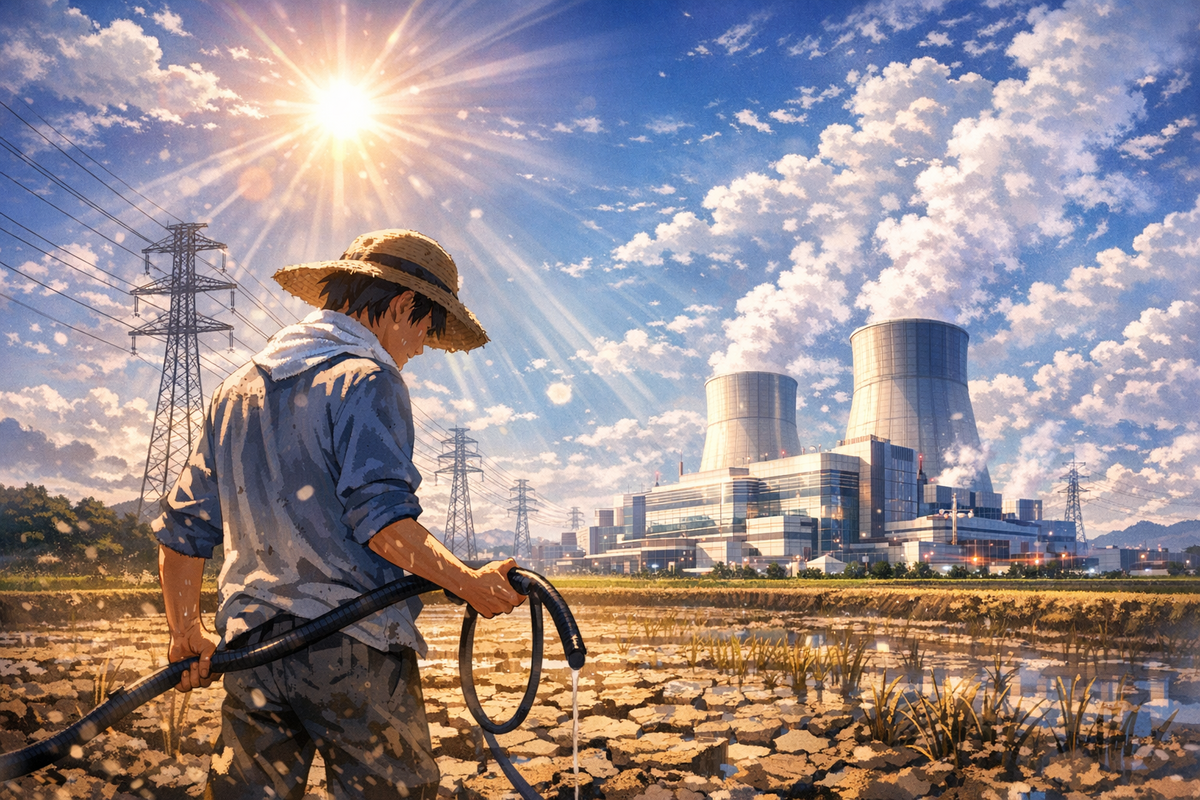
2021年春天,嘉南平原51,100公頃稻田收到停灌令。三個耕作期,農民不種稻,改領補償金。水往北送,進了竹科和中科的管線。台積電那年日耗淡水15萬噸,超過台北市一天的用水量。水不夠用,有人要排在後面。農田排在半導體後面。
這場停灌抗議最後平息,但帳還在。台灣97%能源仰賴進口,燃煤佔三分之一,液化天然氣(LNG)庫存僅夠10天——日本是60天,韓國50天。我們用10天的緩衝支撐全島電網,而台積電一家公司2021年已吃下全台10%電力,2030年預估跳到24%。
AI伺服器讓電力缺口擴大四倍
台灣2026年AI伺服器出口將佔全球60%,但AI訓練的耗電量是一般伺服器的4到10倍。Google彰化資料中心2024年起改用非飲用再生水(non-potable water),成為台灣第一個大規模轉型的案例。現實逼出來的,不是公關稿。
台積電已承諾2050年淨零排放,加入RE100聯盟,要求供應商同步達標。2024年台灣再生能源佔總發電11.6%,首次突破10%——太陽能裝置容量14,281 MW,離岸風電3,905 MW。政府目標是2030年太陽能達20GW、離岸風電13.1GW。數字漂亮,但工業用電需求的增速遠遠超過綠電建置。
廢核政策與科技擴張的時間差
2024年台灣能源轉型的矛盾在於:廢核政策加速了再生能源佈局,但科技業擴張的速度更快。台積電3奈米廠一座接一座開,每座廠的耗電量都是上一代的倍數成長。綠電建置需要十年,但晶片廠從動工到量產只需三年。
這不是要否定台積電的價值。2023年台灣出口總額中,半導體佔比超過三成,台積電一家公司貢獻了台灣GDP的7%。農田停灌、電網脆弱、能源進口依賴——這些是這套模式的成本,帳目就擺在那裡。
真正的天花板不是技術
台灣的晶片製程技術領先全球,但水電供應是硬上限。LNG只有10天庫存,意味著任何區域衝突或航運中斷都可能讓全島斷電。15萬噸日耗水量,意味著每次旱季都得重新談判誰優先。
嘉南那51,100公頃農田,2021年停灌三期後至今沒再恢復滿灌。科技奇蹟的代價已經寫在土地上。台積電2030年若真耗掉全台24%電力,10天的LNG庫存不會變多。
— 黃健豪
When 51,100 Hectares Went Dry for Semiconductors
Spring 2021. Jianan Plain, southern Taiwan. 51,100 hectares of rice paddies received a shutdown order. Three growing seasons, no planting. Farmers took compensation payments instead. The water traveled north, into pipelines feeding Hsinchu and Central Taiwan Science Parks. TSMC consumed 150,000 tons of freshwater daily that year—more than Taipei’s entire daily usage. This wasn’t a natural disaster. It was a choice: when water runs short, who gets priority?
The protests eventually quieted, but the ledger remains open. Taiwan imports 97% of its energy—one-third coal, liquefied natural gas (LNG) reserves lasting just 10 days. Japan holds 60 days, South Korea 50. We run the entire grid on a 10-day buffer. TSMC alone consumed 10% of Taiwan’s electricity in 2021. By 2030, projections hit 24%.
AI Servers Quadruple the Power Gap
By 2026, Taiwan will export 60% of global AI servers. AI training consumes 4 to 10 times the electricity of standard servers. Google’s Changhua data center switched to non-potable recycled water in 2024—Taiwan’s first major facility to pivot. Not a PR stunt. A forced adaptation.
TSMC pledged net-zero emissions by 2050, joined RE100, demanded suppliers follow suit. In 2024, renewable energy reached 11.6% of total generation—first time above 10%. Solar capacity: 14,281 MW. Offshore wind: 3,905 MW. Government targets 20GW solar and 13.1GW offshore wind by 2030. Impressive numbers, but industrial demand outpaces green buildout by a wide margin.
The Nuclear Phase-Out Versus Tech Expansion Timeline
Taiwan’s energy paradox in 2024: denuclearization accelerated renewable deployment, but tech expansion moved faster. TSMC opens one 3nm fab after another, each generation doubling power consumption. Green infrastructure takes ten years to build. Chip fabs go from groundbreaking to mass production in three.
This isn’t about dismissing TSMC’s value. In 2023, semiconductors made up over 30% of Taiwan’s exports. TSMC alone contributed 7% of GDP. The question is whether we honestly account for the model’s cost: farmland sacrificed, grid fragility, import dependence.
The Real Ceiling Isn’t Technical
Taiwan leads the world in chip manufacturing technology. Water and electricity are the hard limits. Ten days of LNG reserves means any regional conflict or shipping disruption could black out the island. 150,000 tons daily water consumption means every drought reopens negotiations over priority access.
Those 51,100 hectares in Jianan never returned to full irrigation after 2021. The cost of the tech miracle is already written into the land. If TSMC truly consumes 24% of national electricity by 2030, how much buffer remains? Not rhetoric. Arithmetic.
— 黃健豪
延伸閱讀
https://justfly.idv.tw/s/BHaALsj