
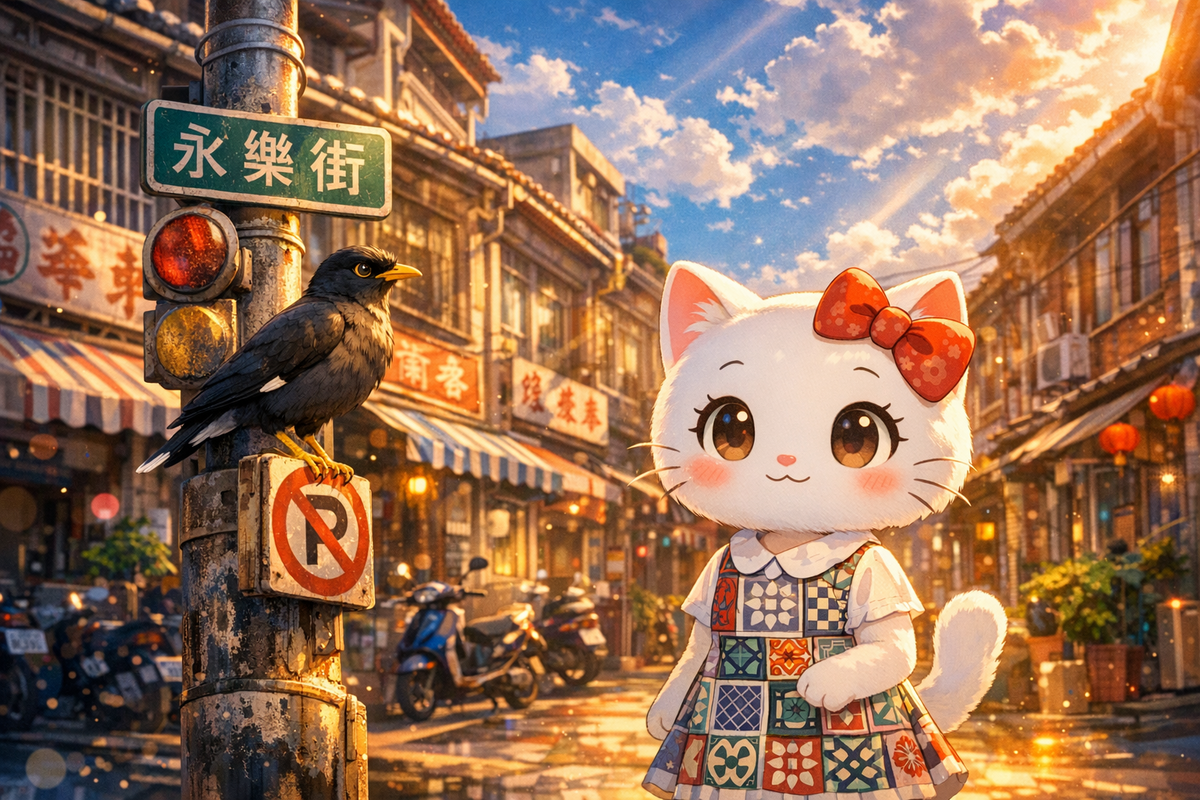
當 Hello Kitty 身穿印有台灣鐵花窗圖騰的洋裝,或是站在復古磁磚前與台灣八哥鳥對望,這不只是一次普通的授權聯名,而是台灣品牌正在展現的獨特競爭力——將國際 IP 進行深度「文化轉譯」的能力。
從代工到文化策展:台灣品牌的轉型突圍
印花樂作為台灣在地設計品牌,近年來成功與多個國際 IP 合作,包括 RODY 跳跳馬、Hello Kitty 以及酷企鵝。這些聯名的共同點在於,印花樂並非單純將 IP 角色印在商品上,而是透過設計語言重新詮釋這些角色。以 Hello Kitty 為例,印花樂將台灣特有的鐵花窗、老磁磚、台灣八哥鳥等元素融入設計,讓這隻陪伴無數人童年的白色小貓,有了更成熟、更具文化底蘊的樣貌。
這種「兒時玩伴長大後」的輕熟風格,不僅保留了 IP 本身的親切感與辨識度,更為品牌開拓了新的客群——那些曾經喜愛 Hello Kitty、如今已是青壯年的消費者,他們渴望在成年後的生活中,以更成熟的方式延續童年記憶。
在地化不是表面功夫:三個關鍵要素
觀察台灣品牌近期的國際 IP 合作案例,可以歸納出成功的文化轉譯需要三個關鍵要素。首先是保留 IP 的核心特質——Hello Kitty 的可愛本質不能消失,但可以用更細膩的方式呈現。其次是加入具辨識度的在地文化記憶點,如鐵花窗這類專屬於台灣街景的視覺符號,讓國際 IP 有了地域性的新生命。
第三個要素則是風格調整,以開拓新客群。Timberland 首度與台灣插畫家 Kurt Wu 合作推出在地聯名,便是看中了台灣創作者能為美式經典品牌注入亞洲美學與都會感。同樣地,Gogoro 與迪士尼《玩具總動員》聯名推出的 EZZY 500 系列,也將童趣元素轉化為年輕世代喜愛的街頭潮流風格。
文化轉譯作為差異化競爭力
這些案例揭示了一個重要趨勢:當全球市場充斥著大同小異的 IP 授權商品時,台灣品牌的機會點在於「文化轉譯」能力。這不只是將國際元素與本土元素簡單拼貼,而是理解兩種文化的精髓後,創造出具有新意義的第三種語言。
印花樂的成功在於,它讓國際授權方看見,台灣市場不只是另一個銷售據點,而是一個能為 IP 注入新生命的文化實驗場。當 Hello Kitty 穿上印有鐵花窗的衣服,它不僅在台灣有了更深的共鳴,這樣的設計思維也可能啟發其他市場的在地化可能性。
從授權到共創的新模式
更值得關注的是,這種文化轉譯能力正在改變品牌與 IP 授權方的關係。過去台灣品牌多處於被動接受授權的角色,但當品牌展現出獨特的文化詮釋能力,便有機會與國際 IP 進行更深度的共創對話。這不僅提升了台灣品牌的議價能力,也為產業帶來新的想像空間。
在全球化與在地化交織的當代,台灣品牌正透過文化轉譯,證明小市場也能有大影響力。當我們能以細膩的文化理解,為國際 IP 創造新的樣貌時,這份能力本身就是最珍貴的品牌資產。
— 陳映彤
How Taiwanese Brands Win Global IPs Through Cultural Translation
When Hello Kitty appears wearing a dress adorned with Taiwan’s iconic iron window grilles, or stands before vintage tiles alongside a Javan myna, it’s more than just another licensing collaboration. It represents a distinctive competitive advantage that Taiwanese brands are demonstrating: the ability to perform deep “cultural translation” with global IPs.
Beyond Manufacturing: Taiwan’s Brand Transformation
inBlooom, a Taiwanese design brand, has successfully collaborated with multiple international IPs in recent years, including RODY, Hello Kitty, and Badtz-Maru. What sets these collaborations apart is that inBlooom doesn’t simply print IP characters on products. Instead, the brand reinterprets these characters through its design language. For the Hello Kitty collaboration, inBlooom integrated uniquely Taiwanese elements—iron window grilles, vintage tiles, and the Javan myna—into the designs, giving the beloved white cat a more mature aesthetic with deeper cultural resonance.
This “childhood companion all grown up” approach not only preserves the IP’s inherent warmth and recognition but also opens new customer segments: those who loved Hello Kitty in childhood and now seek more sophisticated ways to extend those memories into adulthood.
Three Keys to Successful Cultural Translation
Examining recent Taiwanese brand collaborations with international IPs reveals three essential elements for successful cultural translation. First, the core essence of the IP must be preserved—Hello Kitty’s fundamental cuteness remains, but expressed with greater subtlety. Second, recognizable local cultural touchpoints must be integrated, such as iron window grilles that are uniquely embedded in Taiwan’s streetscapes, giving global IPs new regional vitality.
The third element involves style adjustment to reach new audiences. Timberland’s first-ever collaboration with Taiwanese illustrator Kurt Wu demonstrates how Taiwanese creators can infuse American heritage brands with Asian aesthetics and urban sensibilities. Similarly, Gogoro’s partnership with Disney’s Toy Story for the EZZY 500 series transforms playful elements into street-style appeal for younger generations.
A Competitive Edge Through Cultural Fluency
These cases reveal an important trend: as global markets overflow with standardized IP merchandise, Taiwanese brands find their advantage in cultural translation abilities. This transcends simple juxtaposition of international and local elements; it requires understanding the essence of both cultures to create a meaningful third language.
inBlooom’s success demonstrates to international licensors that the Taiwanese market isn’t merely another sales territory, but a cultural laboratory capable of breathing new life into IPs. When Hello Kitty wears iron window grilles, it resonates more deeply in Taiwan while potentially inspiring localization possibilities in other markets.
Toward Co-Creation Models
More significantly, this cultural translation capability is transforming relationships between brands and IP licensors. Where Taiwanese brands once passively received licenses, demonstrating unique cultural interpretation abilities now enables deeper co-creation dialogues with global IPs. This not only strengthens Taiwanese brands’ negotiating power but opens new imaginative spaces for the industry.
In an era where globalization and localization interweave, Taiwanese brands are proving through cultural translation that small markets can wield significant influence. When brands can create new manifestations of international IPs through nuanced cultural understanding, that capability itself becomes the most valuable brand asset.
— Chen Ying-Tung