每次搭捷運經過台北車站,看著來自各地的旅客,我總會想:如果時光倒轉五千年,從這座島嶼出發的人們,最終會抵達哪裡?答案讓人震撼——從非洲東岸的馬達加斯加,到南美洲外海的復活節島,橫跨半個地球的250個民族,他們的祖先都來自台灣。
這不是民族主義的神話,而是語言學、古DNA、甚至構樹DNA三大學科研究收斂後的科學共識。作為一個在數位時代思考身份認同的人,這個發現讓我重新審視「台灣」這個概念的真正厚度。
三條證據鏈指向同一個起點
語言學家最早發現端倪。南島語系涵蓋1200多種語言,從台灣原住民語言的多樣性與古老性來看,這裡保存了最接近源頭的語言特徵。就像生物演化樹,分支越多的地方越接近根部——台灣就是那個根部。
接著古DNA研究加入戰局。太平洋島嶼居民的基因組分析顯示,他們的遺傳標記可以追溯到台灣東部的史前族群。更驚人的是構樹DNA研究:構樹是南島民族航海時隨身攜帶的實用植物,科學家追蹤太平洋各島嶼的構樹基因,發現它們都源自台灣品種。這些樹木成了活生生的航海日誌。
三條獨立的證據鏈,最終都指向台灣東部的海洋社群。這不是巧合,而是歷史的確鑿證據。
250個民族的共同記憶
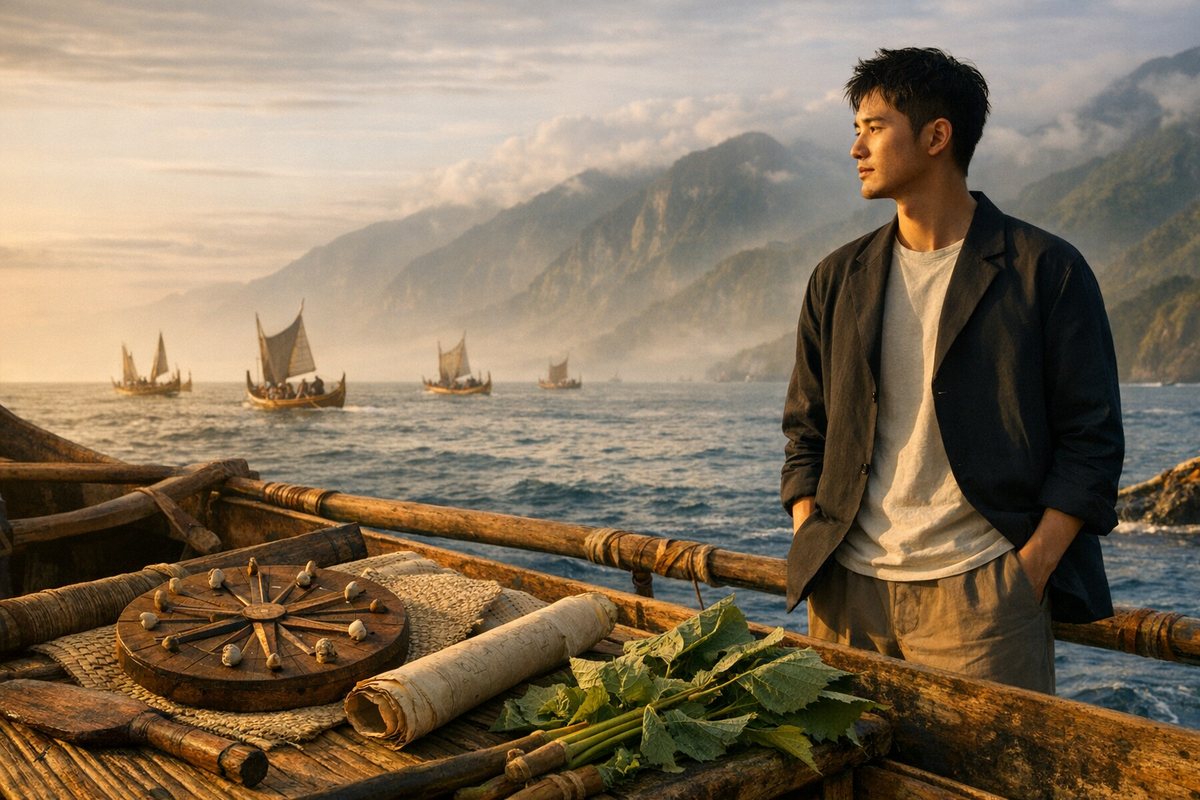
想像一下:五千年前,當世界其他文明還在大陸上建立城邦,台灣的先民已經開始了人類史上最偉大的航海冒險。他們駕駛著獨木舟,帶著芋頭、構樹、豬隻,一代又一代地向未知的海洋進發。
他們先到菲律賓,再擴散到整個東南亞島嶼。一支往西,跨越印度洋抵達馬達加斯加——這是人類史上最瘋狂的航海壯舉之一。另一支往東,逐島跳躍,最終到達復活節島,距離台灣超過一萬公里。
這不是一次性的大遷徙,而是綿延數千年的持續探索。每個島嶼都成為新的跳板,每個族群都發展出獨特的文化,但他們的語言、神話、航海技術,都保留著來自台灣的基因。
被低估的台灣故事
在全球化的今天,我們習慣將台灣定位為「科技島」或「民主燈塔」,卻很少意識到這座島嶼在人類文明史上的獨特地位。南島語族的故事提醒我們:台灣不只是地緣政治的棋子,更是人類探索精神的原點之一。
更深刻的是,這個故事挑戰了我們對「起源」的想像。台灣不是封閉的孤島,而是開放的出發點。南島民族的擴張不是征服,而是連結——他們把台灣的文化基因播撒到半個地球,同時也在每個島嶼上吸收、創新、重組。
這種「出發而非抵達」的身份認同,或許正是當代台灣最需要的視角。我們不需要被地理或政治限制,因為在我們的文化基因裡,本來就刻著向海洋開放、向未知探索的DNA。
五千年前,我們的祖先用獨木舟征服了半個地球。今天,我們用什麼征服未來?答案或許不在腳下的土地,而在我們敢不敢再次出發的勇氣。
When Taiwanese Conquered Half the Earth: The 5000-Year Austronesian Epic
Every time I pass through Taipei Main Station on the MRT, watching travelers from all directions, I wonder: if we could rewind five thousand years, where would people departing from this island eventually arrive? The answer is staggering—from Madagascar off Africa’s east coast to Easter Island near South America, 250 ethnic groups spanning half the planet all trace their ancestors back to Taiwan.
This isn’t nationalist mythology, but scientific consensus where three independent disciplines converge: linguistics, ancient DNA, and even paper mulberry genetics. As someone thinking about identity in the digital age, this discovery makes me reconsider the true depth of what “Taiwan” really means.
Three Lines of Evidence, One Origin Point
Linguists noticed it first. The Austronesian language family encompasses over 1,200 languages, and the diversity and antiquity preserved in Taiwanese indigenous languages suggest they’re closest to the source. Like an evolutionary tree, where the most branches cluster near the roots—Taiwan is that root system.
Then ancient DNA research joined the investigation. Genetic analysis of Pacific islanders revealed markers traceable to prehistoric groups in eastern Taiwan. Even more remarkable is paper mulberry DNA: this utilitarian plant traveled with Austronesian voyagers, and scientists tracking mulberry genetics across Pacific islands found they all originate from Taiwanese varieties. These trees became living ship logs.
Three independent chains of evidence, all pointing to maritime communities in eastern Taiwan. Not coincidence—historical certainty.
The Shared Memory of 250 Peoples
Imagine this: five thousand years ago, while other civilizations were building city-states on continents, Taiwan’s ancestors were launching humanity’s greatest seafaring adventure. They sailed outrigger canoes, carrying taro, paper mulberry, and pigs, generation after generation venturing into unknown oceans.
They reached the Philippines first, then dispersed throughout Southeast Asian islands. One branch went west, crossing the Indian Ocean to Madagascar—among the most audacious maritime feats in human history. Another went east, island-hopping until reaching Easter Island, over 10,000 kilometers from Taiwan.
This wasn’t a single mass migration, but continuous exploration spanning millennia. Each island became a new launching point, each group developing unique cultures, yet their languages, myths, and navigation techniques all retained Taiwanese DNA.
Taiwan’s Underestimated Story
In today’s globalized world, we habitually position Taiwan as a “tech island” or “beacon of democracy,” rarely recognizing this island’s unique place in human civilization history. The Austronesian story reminds us: Taiwan isn’t merely a geopolitical chess piece, but one of humanity’s original points of exploratory spirit.
More profoundly, this story challenges our imagination of “origins.” Taiwan wasn’t a closed island, but an open point of departure. Austronesian expansion wasn’t conquest but connection—they scattered Taiwan’s cultural genes across half the Earth while absorbing, innovating, and recombining at each island.
This “departure rather than arrival” identity might be exactly the perspective contemporary Taiwan needs. We needn’t be limited by geography or politics, because our cultural DNA already carries the code for oceanic openness and exploration of the unknown.
Five thousand years ago, our ancestors conquered half the Earth in outrigger canoes. Today, what do we use to conquer the future? The answer perhaps lies not in the land beneath our feet, but in whether we dare to depart again.