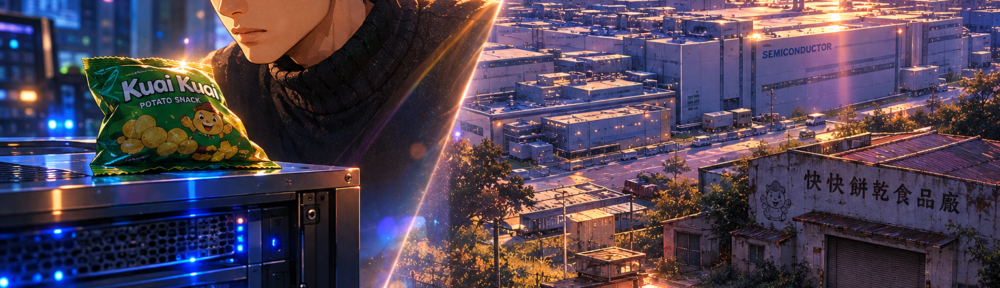

綠色乖乖的包裝,印刷圈有個行話:那是一個很難調的綠。奶油椰子口味的那包,綠得跟機房面板上的運作燈一樣,工程師才會相信它能鎮住機器。這包綠色小袋子在台灣機房裡擺了二十多年,最早的公開記載是2003年《中國時報》副刊那篇〈怕當機?來,放一包乖乖〉;更早,1998年前的交通大學研究室裡,就有人擺了。
2026年10月2日,生產它的中壢廠,工會發動了無限期罷工。
土地賣了,承諾還在
導火線很具體:母公司三地集團將廠房土地高價出售給日月光半導體封裝廠。工會指控資方拿「2年內不裁員」的承諾,去迴避資遣費。10月5日,桃園市政府勞動局主持協商,董事長鍾育霖出面接受工會訴求;工會預計在10月6日臨時大會通過後正式解除罷工。
協商落幕,廠還是要讓位。工人拿到的是資遣,不是留下。部分工人面臨的難題是技能不匹配:做了一輩子零食產線的手,要去接什麼樣的位子,目前沒有人給出答案。
買地的人做什麼
日月光做的事,白話說就是晶片的後段加工。每顆晶片從台積電出來,都要經過積體電路封測廠的封裝與測試,才能裝進手機或伺服器。中壢本來就是日月光的據點,定位是研發總部加高階製造。AI 伺服器要的晶片越多,封測要的廠房越多,而廠房底下得有地。
這就是這場交易的順序:AI 需要晶片,晶片需要封測廠,封測廠需要土地,土地原本是別人的飯碗。
同一個秋天,不只一處
乖乖不是孤例。同一時期,美光台灣工會進行罷工投票,中華電信工會規劃10月罷工。三件事擺在一起,推力是同一個方向:半導體景氣帶動的廠房土地炒作與企業重組壓力,從底層勞動者身上轉嫁出去。台灣經濟靠1987年成立的台積電、靠新竹那一串封裝設備的聚落爬上來,成績單上的數字漂亮,表格裡卻沒有留一欄給被讓位的產線。
一包零食的帳
放一包乖乖幾乎零成本,機器當機的代價卻很高,所以工程師「寧可信其有」。這個算法反過來看也成立:機房裡的綠袋子便宜,守護它的那條產線,卻要有人付出整份工作。規則還寫得很清楚:必須是綠色、不能過期、不能被吃掉。
下一次伺服器上那包乖乖過期了,換新的那一包,是從哪個廠出來的?目前中壢廠的搬遷時程與資遣名單,還沒有公布。
— 周子恩
The Green Bag Guards Servers, Not Its Own Factory
In print shops there is a saying about the green on the Kuai Kuai bag: it is a hard green to mix. The coconut-flavored bag is the same green as the “running” light on a server panel, which is why engineers trust it to keep machines calm. The bag has sat on Taiwanese server racks for decades. The earliest public record is a 2003 China Times supplement piece titled “Afraid of crashes? Put a bag of Kuai Kuai on it,” and there were already bags in research labs at National Chiao Tung University before 1998.
On October 2, 2026, the union at the factory that makes the snack in Zhongli launched an indefinite strike.
The land was sold, the promise stayed
The trigger was concrete. Parent company Sanhi Group sold the factory land at a high price to semiconductor packaging firm ASE Group. The union accused management of using a “no layoffs for 2 years” pledge to dodge severance pay. On October 5, the Taoyuan City labor bureau chaired talks, and chairman Chung Yu-lin accepted the union’s demands. The union was to lift the strike after a general meeting on October 6.
The talks ended, but the factory still gives way. What workers receive is severance, not their jobs. Some face a skills mismatch: hands that spent careers on a snack line, with no clear answer yet on what comes next.
What the buyer does
In plain terms, ASE handles the back end of chip-making. Every chip leaving TSMC still goes through a packaging and testing plant before it can sit inside a phone or server, and the finished part is an integrated circuit. Zhongli is already an ASE site, listed as a R&D headquarters plus high-end manufacturing. More AI servers means more chips, more chips means more packaging floor space, and floor space needs land that used to belong to someone else’s livelihood.
One autumn, several sites
Kuai Kuai is not an isolated case. In the same weeks, the Micron Taiwan union held a strike vote and the Chunghwa Telecom union planned an October strike. All three point the same way: land speculation and corporate restructuring driven by the semiconductor boom, with the cost passed down to workers. The success story runs from TSMC’s founding in 1987 to the Hsinchu cluster, and the ledger has no column for a displaced production line.
The cost of one bag
Placing a bag costs almost nothing, while a crashed machine costs a great deal, so engineers prefer to believe. Flip the arithmetic and it holds too: the bag on the rack is cheap, but the line that makes it can cost someone an entire job. The rules are strict: green only, not expired, not eaten.
When the bag on a server expires and gets replaced, which factory will the new one come from? The relocation timetable and layoff list for the Zhongli plant have not been published.
— 周子恩
延伸閱讀
- 工程師薪水買韓國包,竹科打臉了誰的刻板印象
- 台股站上200日均線26%的時候,你該加碼還是收手
- 洋芋片袋裡的相機,與一紙50-50合資協議
- 資金潮起,但不是每艘船都會漲
- 聯準會三票異見,美元下行訊號比表決更值得看
https://justfly.idv.tw/s/pAWPapr