
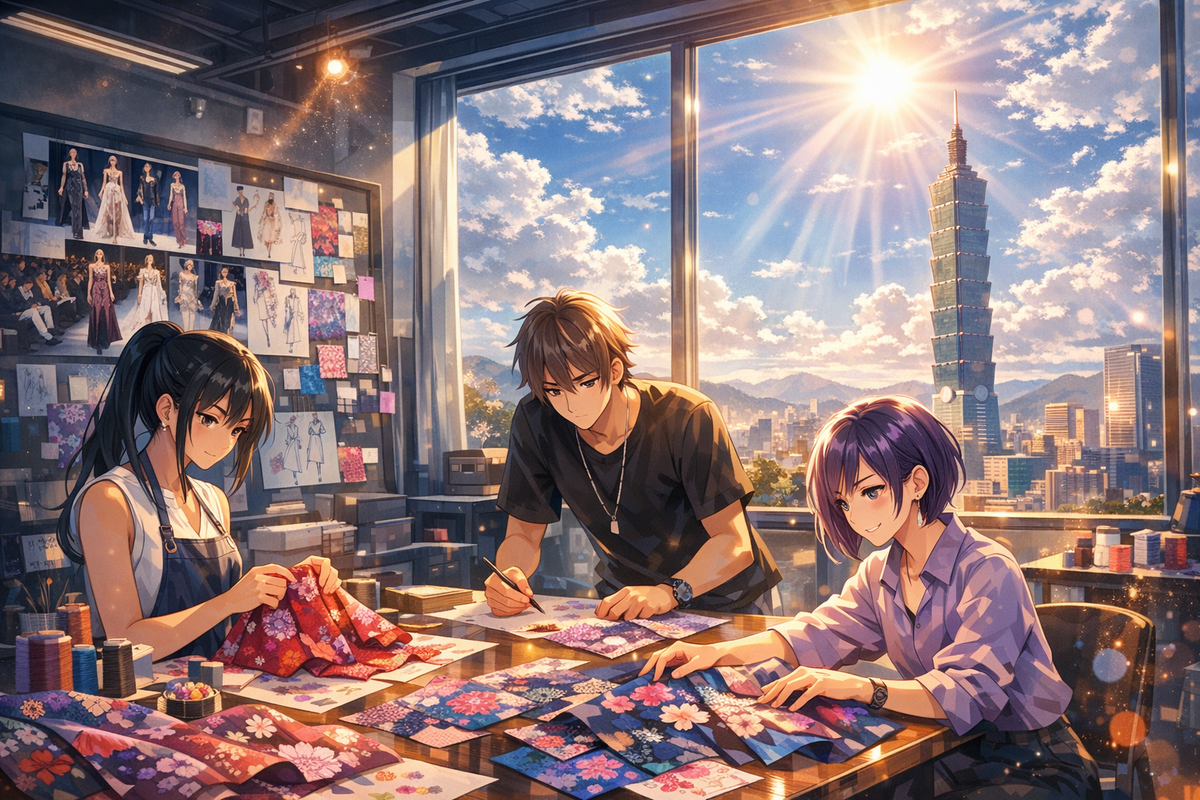
LVMH Prize 2026準決賽名單公佈那天,NAMESAKE、Chiahung Su、GOOPiMADE三個台灣品牌同時出現在候選名單上。這是台灣時尚史上從沒發生過的事。不是一個品牌驚喜入圍,是三個。
LVMH Prize是全球頂級時裝設計師競賽,Jacquemus靠它從法國南部小鎮走進巴黎時裝週,Marine Serre拿獎後訂單排到三年後。這個競賽的評審團是Bernard Arnault和LVMH集團旗下所有創意總監,他們看的不是市場銷量,是設計師能否建立一套完整的視覺語言系統。三個台灣品牌同年過關,意味著台灣設計師的整體質量已經達到歐洲頂級品味裁判的標準。
不是複製日本,是對等協作
NAMESAKE同步與山本耀司先鋒單位WILDSiDE推出聯名系列,Justin Bieber和王嘉爾已經穿上身。這不是借日本名氣,是雙向文化認證——山本耀司的團隊主動找上NAMESAKE,因為他們看到了台灣設計師能提供的東西:不是複製日本的極簡主義,也不是模仿韓國的街頭潮流,而是一種混雜了漢字書法結構、台灣花布色彩邏輯、數位世代視覺經驗的新語言。
Yentity首次登上東京時裝週,VIVIANO讓Lady Gaga和Bad Bunny穿上台灣設計。這些不是單點突破,是台灣設計師集體建立「與日本對等協作」的新敘事。問題是,這條路怎麼被建起來的?
產業基礎設施在哪裡
1950到1960年代,台灣有超過200家印染工廠,桃園和新竹是重鎮,年產量達數千萬碼,外銷東南亞。那是台灣紡織業的黃金時代,但產業鏈只做到代工,沒有建立品牌。直到藝術家林明弘(Michael Lin)把台灣花布圖案帶進國際美術館,設計師吳季剛重新詮釋花布元素做當代時尚,台灣設計才開始有從在地傳統提煉成國際語言的能力。
但這還不夠。NAMESAKE、Chiahung Su、GOOPiMADE能走到LVMH Prize,靠的不只是個人才華,還有一套逐漸成形的基礎設施:台北時裝週提供實驗舞台,紡織產業綜合研究所(TTRI)開放材料技術支援,文化內容策進院(TAICCA)補助國際參展經費。這些不是補助政策,是讓設計師能專注做設計的最低限度支撐。
下一代設計師要建什麼
三個品牌入圍LVMH Prize,證明台灣設計師的視覺語言已經能被國際市場辨識。但要從「能被看見」到「能被購買」,還缺一塊:商業基礎設施。台灣沒有像東京、首爾那樣的買手店生態系統,沒有能對接國際訂單的showroom,沒有專門服務獨立設計師品牌的supply chain management平台。
LVMH Prize決賽將在2026年6月公佈。無論誰得獎,真正的問題是:下一批台灣設計師要怎麼走這條路?是繼續靠個人才華單打獨鬥,還是建立一套能讓更多人站上國際舞台的系統?
— 蘇凡恩
延伸閱讀
Three Taiwanese Brands in LVMH Prize: Who Built This Road
When the LVMH Prize 2026 semi-finalist list dropped, three Taiwanese brands appeared together: NAMESAKE, Chiahung Su, GOOPiMADE. This had never happened in Taiwan’s fashion history. Not one surprise entry — three.
LVMH Prize is the world’s top fashion design competition. Jacquemus used it to leap from a small town in southern France to Paris Fashion Week. Marine Serre’s order book filled up for three years after winning. The jury is Bernard Arnault and every creative director under LVMH. They don’t judge sales figures. They judge whether a designer can build a complete visual language system. Three Taiwanese brands passing this filter means Taiwan’s design quality has met European elite taste standards.
Not Copying Japan, But Equal Collaboration
NAMESAKE simultaneously launched a collaboration with Yohji Yamamoto’s avant-garde unit WILDSiDE. Justin Bieber and Jackson Wang already wore the pieces. This isn’t borrowing Japanese prestige — it’s bilateral cultural certification. Yamamoto’s team approached NAMESAKE because they saw what Taiwanese designers could offer: not a copy of Japanese minimalism, not an imitation of Korean streetwear, but a new language mixing Chinese calligraphy structure, Taiwan floral fabric color logic, and digital-native visual experience.
Yentity debuted at Tokyo Fashion Week. VIVIANO put Lady Gaga and Bad Bunny in Taiwanese design. These aren’t isolated breakthroughs. They’re Taiwanese designers collectively building a narrative of “equal collaboration with Japan.” The question is: how was this road built?
Where Is the Infrastructure
From 1950 to 1960, Taiwan had over 200 textile printing factories. Taoyuan and Hsinchu were hubs, producing tens of millions of yards annually for Southeast Asian export. That was Taiwan’s textile golden age, but the supply chain only reached OEM manufacturing, never brand building. Not until artist Michael Lin brought Taiwan floral patterns into international museums, and designer Jason Wu reinterpreted floral elements for contemporary fashion, did Taiwan design begin developing the ability to distill local tradition into international language.
But that’s not enough. NAMESAKE, Chiahung Su, and GOOPiMADE reaching LVMH Prize didn’t rely solely on individual talent. They had a gradually forming infrastructure: Taipei Fashion Week providing an experimental stage, Taiwan Textile Research Institute (TTRI) opening material technology support, Taiwan Creative Content Agency (TAICCA) funding international exhibition costs. These aren’t just subsidy policies — they’re the minimum support letting designers focus on design.
What the Next Generation Must Build
Three brands entering LVMH Prize proves Taiwanese designers’ visual language can be recognized internationally. But moving from “can be seen” to “can be bought” requires one missing piece: commercial infrastructure. Taiwan lacks Tokyo or Seoul’s buyer store ecosystem. No showroom connecting international orders. No supply chain management platform serving independent designer brands.
LVMH Prize finals announce in June 2026. Whoever wins, the real question is: how will the next wave of Taiwanese designers walk this road? Continue relying on individual talent fighting alone, or build a system letting more people reach the international stage?
— 蘇凡恩