普里奇歐尼宮的牆壁曾經關押威尼斯的罪犯。2026年,它關住的是一塊發光的螢幕——以及每一個走進去、被迫停下來的觀眾。
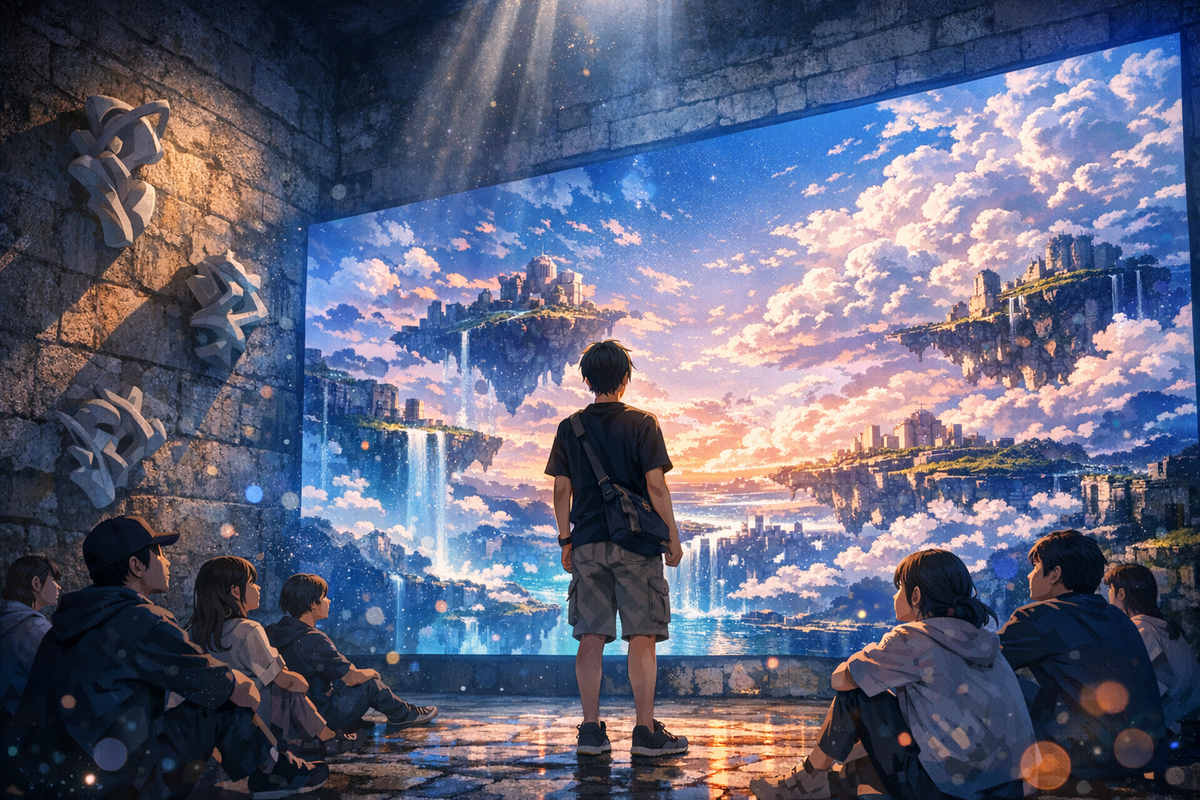
第61屆威尼斯雙年展台灣館選了這裡。37歲的李亦凡帶著《鬱卒的平面》(Screen Melancholy),用遊戲引擎即時渲染一部60分鐘的LED錄像裝置,在前身為威尼斯監獄的普里奇歐尼宮展出。你坐下來,或者站著,反正你跑不掉。這六十分鐘是一種被設計過的困住。
為什麼是「鬱卒」,不是「批判」
2026年威尼斯雙年展的策展主題是「小調」,吸引約100個國家參與。在這個脈絡裡,AI批判幾乎是各國的標準配備。美國的Trevor Paglen以監控影像為題,日本的Ei Arakawa-Nash端出技術展示,大家都在「回應AI」——意思是,大家都在對AI表態。
台灣沒有表態。
李亦凡的切入點是:AI可以無限量產圖像,但它複製不了帶有焦慮感的「數位疲憊」。他用遊戲引擎記錄人與螢幕的關係,作品裡甚至保留了藝術家本人以VR操控角色的過程——這個「數位操偶」的後設手法,讓觀眾同時看見被操縱者與操縱者,只是搞不清楚誰是誰。螢幕不是罪犯,我們也不是受害者,但我們確實困在裡面。這種失重感,才是《鬱卒的平面》真正的命題。
不批判,不給解答。台灣選了最難說清楚的路。
這不是台灣第一次在威尼斯走這條路
台灣新媒體藝術的系譜,起點可以追溯到1980年代袁廣鳴以視頻藝術奠基的那個年代。從類比訊號到演算法生成,這個場域一直在做的事,是讓技術承載感受,而不是讓技術自我展示。
2017年,黃心健與Laurie Anderson合作的VR作品《Chalkroom》在第74屆威尼斯影展拿下最佳VR體驗獎。那是台灣藝術家第一次在威尼斯以技術媒材贏得最高肯定,但那件作品的核心是記憶與語言在虛空間裡的漂浮狀態,VR只是它們飄盪的容器。吳哲宇的生成藝術SoulFish同樣在威尼斯雙年展亮相,演算法在他手裡是書法的延伸,不是效率工具。
李亦凡是這條線的最新端點,也是史上最年輕的台灣館代表藝術家。他的前作《難忘的形狀》在2023年拿下金穗大獎,那是金穗影展首次將大獎頒給以實驗短片創作的藝術家。遊戲引擎作為媒材在他的創作裡已經累積多年,是一套方法,不是噱頭。
台灣的新媒體藝術生態有它的基礎設施。C-LAB,前身是空軍總司令部,現在是台灣科技藝術的核心基地,每年舉辦亞洲最重要的數位藝術活動之一。這個場域撐了很長時間,有機構、有預算、有人持續在做,不是哪一屆雙年展前夕臨時拼出來的。
前監獄與螢幕之間,是一個沒有答案的房間
我一直在想普里奇歐尼宮這個選擇。策展人哈法艾爾・馮希卡把台灣館放在一棟有囚禁歷史的建築裡,讓一件關於螢幕困住人的作品在那裡發生——這個空間本身就已經是一個論點。歷史上的囚犯被牆壁關住,我們被LED的光關住,差別只在於我們付了錢買票進來,而且大多數時候還覺得這是自願的。
李亦凡不在作品裡指控螢幕。他只是讓你在那個房間裡待滿六十分鐘,感受你自己的數位身體是什麼狀態。這種「不給答案的誠實」,在AI批判論述橫行的威尼斯,反而是一種異質。
台灣館展期至2026年11月22日。普里奇歐尼宮的牆壁還在那裡,螢幕也還亮著。
— 邱珮芸
Sixty Minutes Locked Inside a Screen
The Palazzo delle Prigioni once held Venice’s prisoners. In 2026, what it holds is a glowing screen — and every visitor who walks in and is made to stop.
That is where Taiwan chose to place its pavilion at the 61st Venice Biennale. Lee Yi-fan (李亦凡), 37, the youngest artist ever to represent Taiwan at the exhibition, fills the former prison with Screen Melancholy: a 60-minute LED video installation rendered in real time by a game engine, accompanied by 3D-printed sculpture. You can sit or stand. Either way, you are not leaving for an hour. The confinement is the point.
Not a Critique. A Confession.
The Biennale’s overarching theme this cycle drew participation from around 100 countries. Nearly every major pavilion arrived with some form of AI reckoning. The American presentation by Trevor Paglen confronted surveillance imagery. Japan’s Ei Arakawa-Nash leaned into technical demonstration. The operating assumption was that the correct artistic response to AI is a position — preferably a critical one.
Taiwan offered no position. Lee’s argument is more uncomfortable: AI can generate images without limit, but it cannot reproduce the specific texture of human digital fatigue. His game-engine footage records people’s relationship with screens, and crucially, it preserves footage of the artist himself using VR to puppeteer characters — a meta-layer that makes the viewer unsure who is being controlled and who is doing the controlling. The screen is not the villain. We are not the victim. But we are, undeniably, trapped inside something.
Calling the work Screen Melancholy rather than Screen Critique is not a small distinction. It is the entire strategy.
A Line Running Back to the 1980s
Taiwan’s new media art genealogy begins in the 1980s, when video art pioneers like Yuan Goang-Ming (袁廣鳴) established the foundations of the field. What distinguished that tradition from the start was a refusal to let technology perform itself — the machine always had to carry feeling, or it wasn’t interesting.
In 2017, Huang Hsin-chien (黃心健) and Laurie Anderson’s VR piece Chalkroom won Best VR Experience at the 74th Venice Film Festival. That win mattered not because it proved Taiwan could do VR, but because the work was about language dissolving in virtual space — technology as the vessel for grief, not the subject of admiration. Wu Che-yu’s (吳哲宇) generative work SoulFish has also appeared at the Venice Biennale, with algorithms serving as extensions of calligraphic practice rather than demonstrations of computational power.
Lee Yi-fan is the current end of that line. His earlier work 難忘的形狀 (Unforgettable Shape) won the grand prize at the Golden Harvest Awards in 2023 — the first time that prize went to an experimental short film. The game engine is not a novelty in his practice; it is a method built over years. Behind the whole ecosystem sits C-LAB, the Taiwan Contemporary Culture Lab, housed in the former Air Force Command Headquarters in Taipei, which runs one of Asia’s most significant annual digital art festivals.
What the Prison Walls Already Say
Curator Raphael Fonseca placed the Taiwan pavilion inside a building with a history of confinement, and filled it with a work about confinement by screen. The architecture is already making an argument before the first frame plays. Historical prisoners were held by stone walls. We are held by light. The difference is that we bought a ticket to get in and mostly believe the choice was ours.
Lee does not indict the screen. He asks you to spend sixty minutes inside your own digital body and notice what you find. In a Venice season saturated with AI manifestos, that refusal to conclude is its own kind of statement.
The Taiwan pavilion at Palazzo delle Prigioni runs until November 22, 2026. The walls are still there. The screen is still on.
— 邱珮芸
延伸閱讀
https://justfly.idv.tw/s/bufgFrC