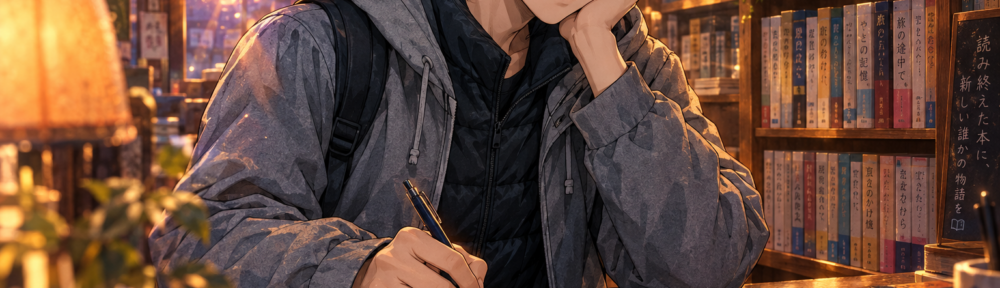

二手書店的文庫本架上,有一種書最難定價:寫滿了字的。劃線、折角、夾著電影票。新潮社《MY BOOK》卻反著來,書一出廠就是空的,只印日期與星期,寫滿了才算完成。它的白色書身站在新潮文庫旁邊,書背上同樣有出版社的標,這個細節比內容更有意思。
一本書的骨架,留給別人填肉
根據新潮社在 10 月 23 日發布的新聞稿,這個系列自 1999 年秋天首次出版,累計發行量相當可觀。內頁只有日期與星期,裝訂比一般文庫更容易攤開,方便壓著書頁寫字。保留下來的還有文庫本的老配備:書籤繩、後記、版權頁。2027 年版的發售日是 2026 年 9 月 28 日。
手帳通常是文具,格子、時間軸、月曆,都是設計者替使用者想好的。這本書把格子拿掉,只留書的形狀。版權頁還在,那一頁要填什麼,沒有規定。
情境演繹:一頁作者頁怎麼寫
以下純屬虛構的場景演繹,不是任何真實讀者的內容。
假設有個在台北上班的人,把 2027 年版的最後幾頁當作者介紹:「本書作者,一年份的通勤、三件反覆穿的外套、兩次沒寄出的信。」版權頁則寫上「初版第一刷,2027 年 1 月 1 日」,然後在其中一天那格貼了一張電影票根。書背用麥克筆補上年份,擺回書架時,和旁邊的《心》排在一起。
新聞稿提到的用法,也大致是這個方向:台北的讀者多為 10 到 20 世代,除了日記,也拿來記穿搭與點子。這是出版方的說法,出自新潮社自己的發布,當作現象的線索可以,當成整座島的閱讀趨勢就太快了。
榜單上的位置,與書架上的位置
新聞稿說,這本書在台北的ジュンク堂書店台北明曜店與ジュンク堂書店ららぽーと台北南港店的日本書籍部門,拿到了週榜第一。同一份稿子也提到韓國有手寫、抄寫的風潮,中國有直播帶動。這些都是出版社彙整的銷售說法,各地的原因不一定相同,更不能互相推論。
能確定的是設計者的賭注。企劃與設計的大貫卓也,在稿子裡的立場是:自己的書收進和文豪同一個書架,才是價值所在。這個賭注靠的是書架上的位置,功能不在其中。數位工具可以把待辦事項排得更整齊,卻沒辦法讓一年的流水帳站到《金閣寺》旁邊。
二手書店的收購櫃檯,偶爾會有人拎著寫滿的筆記本來問能不能收。這本有 ISBN,978-4-10-120879-4。寫滿以後,它仍然是一本有書號的書,只是全世界只有一本。
2027 年的第一頁,日期是 1 月 1 日,星期五。
— 戴安邦
A Paperback Where the Reader Writes the Author Page
On a secondhand shelf of paperbacks, the hardest books to price are the ones already full of handwriting. Underlines, dog-ears, a movie stub for a bookmark. Shinchosha’s MY BOOK works the other way around. It leaves the factory empty, printing only dates and days of the week, and counts as finished only once somebody fills it. Its white spine sits next to the regular Shinchosha paperbacks, and that spine detail says more than the contents do.
A skeleton with the flesh left to the reader
According to Shinchosha’s press release of October 23, the series first appeared in the autumn of 1999 and has a substantial cumulative circulation. The pages carry only dates and weekdays, and the binding opens flatter than an ordinary bunko so a hand can press down while writing. The old paperback fittings stay: a bookmark ribbon, an afterword, a colophon. The 2027 edition goes on sale on September 28, 2026.
A planner is stationery: grids, timelines, calendars, all decided in advance by a designer. This book removes the grid and keeps only the shape of a book. The colophon page is still there. What goes on it is nobody’s rule.
A scene, staged: how an author page might read
What follows is a fictional dramatization, not any real reader’s writing.
Imagine an office worker in Taipei using the last pages of the 2027 edition as an author bio: “Author of this book: one year of commutes, three jackets worn on repeat, two letters never sent.” On the colophon page, “First printing, first edition, January 1, 2027.” A cinema stub is taped to the square for one of the days. The spine gets the year in marker, and the book goes back on the shelf next to a copy of Kokoro.
The uses described in the release point in roughly the same direction: in Taipei, readers mostly in their teens and twenties use it for outfits and idea notes as well as diaries. That is the publisher’s own account. It works as a clue to a phenomenon, but not as proof of a reading trend across Taiwan.
A place on the chart, a place on the shelf
The release says the book took first place in the weekly Japanese-books ranking at two Junkudo stores in Taipei: ジュンク堂書店台北明曜店 and ジュンク堂書店ららぽーと台北南港店. It also mentions a handwriting and copying trend in Korea and livestream selling in China. These are the publisher’s compiled sales claims. The reasons in each market may differ, and none of them can be stacked into a cross-border cause.
What can be said with confidence is the designer’s wager. Takuya Onuki, who planned and designed the book, is cited in the release for the idea that the value lies in one’s own book fitting onto the same shelf as the great writers. That is a bet on shelf position, not on features. A digital tool can line up a to-do list more neatly, but it cannot move a year’s worth of scribbles next to Kinkaku-ji.
At a secondhand counter, a filled notebook sometimes turns up with a question about whether it can be taken. This one has an ISBN: 978-4-10-120879-4. Filled in, it is still a book with a number, only now there is exactly one of it.
The first page of the 2027 edition is January 1, a Friday.
— 戴安邦
延伸閱讀
- 嘉義竹蒸籠還在冒煙,日本找不到的手藝就在這裡
- 赤峰街小店搬去承德路,那杯咖啡的味道會留下嗎
- 大洲臥龍山莊以外:一張和紙,把台灣策展人帶進城下町
- 台鐵排骨便當開盒:先炸後滷的那一塊肉
- 新井耕吉郎紀念碑,立在一杯紅茶的源頭
https://justfly.idv.tw/s/7N4L46Y