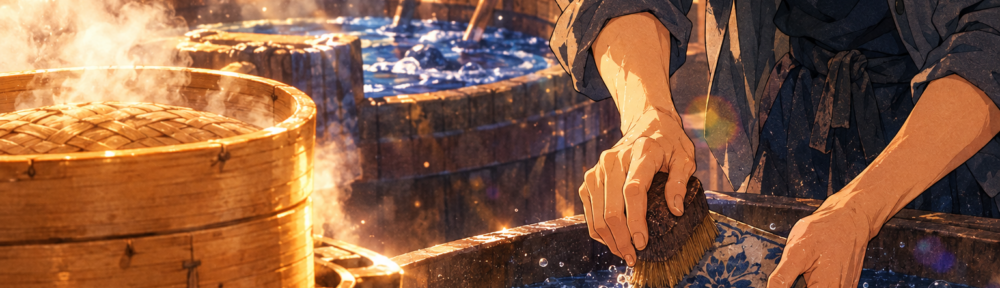
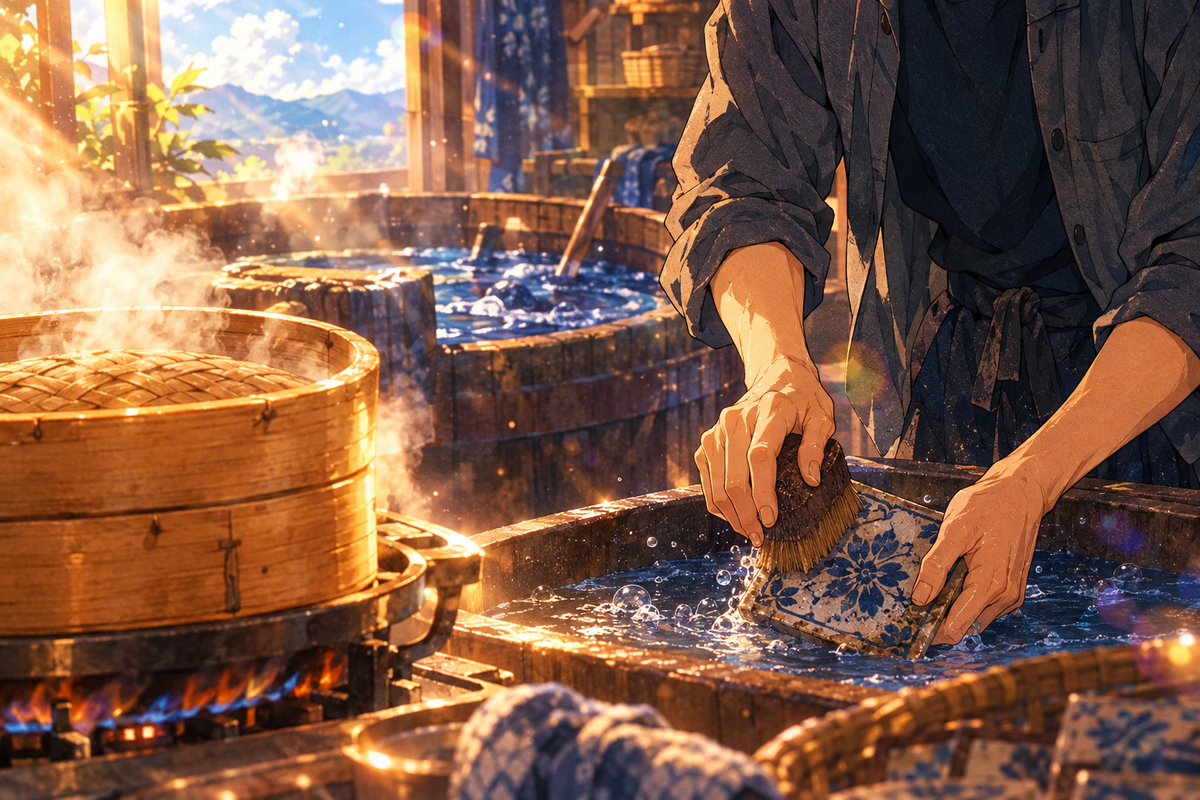
嘉義竹蒸籠擺在灶上,底下的水滾著,蓋緣冒出一圈白氣。竹篾被熱氣燻成蜂蜜色,邊角磨得發亮。這是一件正在上班的工具,沒有人替它打燈,也沒有標籤寫「傳統工藝」。
木工做久了,看東西先看磨損。展櫃裡的器物,磨損停在被收進去的那天。灶上的蒸籠,磨損每天都在長。台灣里山這幾樣手藝,共通點全在這裡:還在用,所以還活著。
竹篾會吸水氣,這是用出來的答案
竹製蒸籠透氣,會吸走多餘的水氣,包子皮才不黏不爛。據國立臺灣工藝研究發展中心相關介紹,這類蒸籠是手編的竹製器具。日本的竹工藝多半走向茶道具,精緻、昂貴、放在架上。里山的竹子則是蒸籠、竹篩、農具,沾油沾水,壞了再編。
兩條路都有道理。只是被當成農具的那一條,不需要任何人下決心保存。
花磚、藍缸、針車,同一種活法
嘉義花磚修復師的工作桌上,日治時期的裝飾瓦一塊一塊清洗,釉面的花紋從泥垢底下慢慢浮出來。沒有化學速成法,只有水、刷子和耐性。每塊磚都是建築上的一個零件,拆下來洗好,還得裝回去。
有一間藍染工坊,正在復育清代的藍草製靛。藍染這個顏色從來不能催,染缸不肯配合,就只能等。
台南的帆布工房裡,昭和初期的縫紉機還在原地運轉,聲音沉,帶著鑄鐵的重量。機器老,卻一直有布料送進去,有人踩,有人換針。苗栗海邊的小鎮,藺草帽至今手編,草香混著海風,一代一代編下來。
五樣東西,沒有一樣是為了「被保存」而存在的。
日本人來找的,是一個還在轉的齒輪
日本人來台灣找回失傳的手藝,這個說法很順耳,也容易講偏。台灣沒有特別保護什麼,只是這幾樣東西沒斷過客人:點心店要蒸包子,農家要篩穀,老屋要修磚,書包和帆布袋要縫。需求在,手就在。
工藝能不能活下去,取決於市場、人口、生活方式多重因素疊出來的結果,用不著替誰評分。
拍成影片,這五樣東西不需要一張人臉。花磚修復師的手、藍缸的氣泡、針車的噪音、竹篾上的蒸氣,鏡頭靠近就夠了。字卡只要寫清楚:這是現役的。
下一個問題很具體:灶上那個蒸籠,底層的竹篾撐得過今年冬天嗎?壞了,師傅會再編一個。
— 曾柏宇
Chiayi Bamboo Steamers Still Smoke, and Japan’s Lost Crafts Are Here
A pot of water is at a rolling boil, and a Chiayi bamboo steamer sits on top of it. A ring of white vapor leaks from the lid. The bamboo strips have been smoked to the color of honey, and the corners are polished by hands. Nobody has lit it with a spotlight or tagged it “traditional craft.” It is simply at work.
A woodworker reads wear before anything else. In a display case, the wear stopped on the day the object was put inside. On a stove, it keeps accumulating. That is the common thread running through these Taiwanese countryside crafts: they survive because they are still in use.
Bamboo absorbs steam, and use proved it
A bamboo steamer breathes. It soaks up excess moisture, so bun skins stay from going gummy or collapsing. According to the National Taiwan Craft Research and Development Institute, steamers like this are hand-woven bamboo tools. Japanese bamboo craft has largely drifted toward tea-ceremony objects: refined, expensive, shelved. Here bamboo is steamer, sieve and farm tool. It gets oiled and wetted, and when it breaks, someone weaves another.
Both paths make sense. Only the second one never needed anyone to decide to preserve it.
Tiles, indigo vats, sewing machines: the same way of living
On a Chiayi tile restorer’s workbench, decorative tiles from the Japanese-ruled period are washed one at a time. The glaze pattern rises slowly out from under the grime. There is no chemical shortcut, only water, a brush and patience. Each tile is a part of a building, so after washing it has to go back in.
In one indigo workshop, craftspeople are reviving Qing-era indigo plant dye-making. The color of indigo cannot be hurried. If the vat will not cooperate, the only option is to wait.
In a Tainan canvas workshop, sewing machines from the early Showa period still run where they were first set down. The sound is low, with the weight of cast iron in it. The machines are old, yet fabric keeps feeding through, and someone keeps pedaling and changing needles. In a seaside town in Miaoli, straw hats are still hand-woven, with the smell of grass mixed into the sea wind, a practice passed down through generations.
Not one of these five exists in order to “be preserved.”
What visitors from Japan are looking for is a gear that is still turning
“Japanese visitors come to Taiwan to find lost crafts” sounds neat and is easy to get wrong. Nobody in Taiwan protected these things in any special way. They just never ran out of customers: dim sum shops need to steam buns, farmers need to sieve grain, old houses need tile repair, bags need stitching. Where demand lasts, hands last.
Whether a craft survives is the product of market, population and lifestyle all stacking up, and nobody needs to be graded for it.
Filmed, these five need no human face. A tile restorer’s hands, bubbles on an indigo vat, the clatter of a sewing machine, steam on bamboo strips: a close lens is enough. The caption card only has to say the object is still in service.
The next question is concrete. Can the bottom bamboo strips of that steamer on the stove last through this winter? If they break, the weavers will make another.
— 曾柏宇
延伸閱讀
https://justfly.idv.tw/s/ooRpg5c