
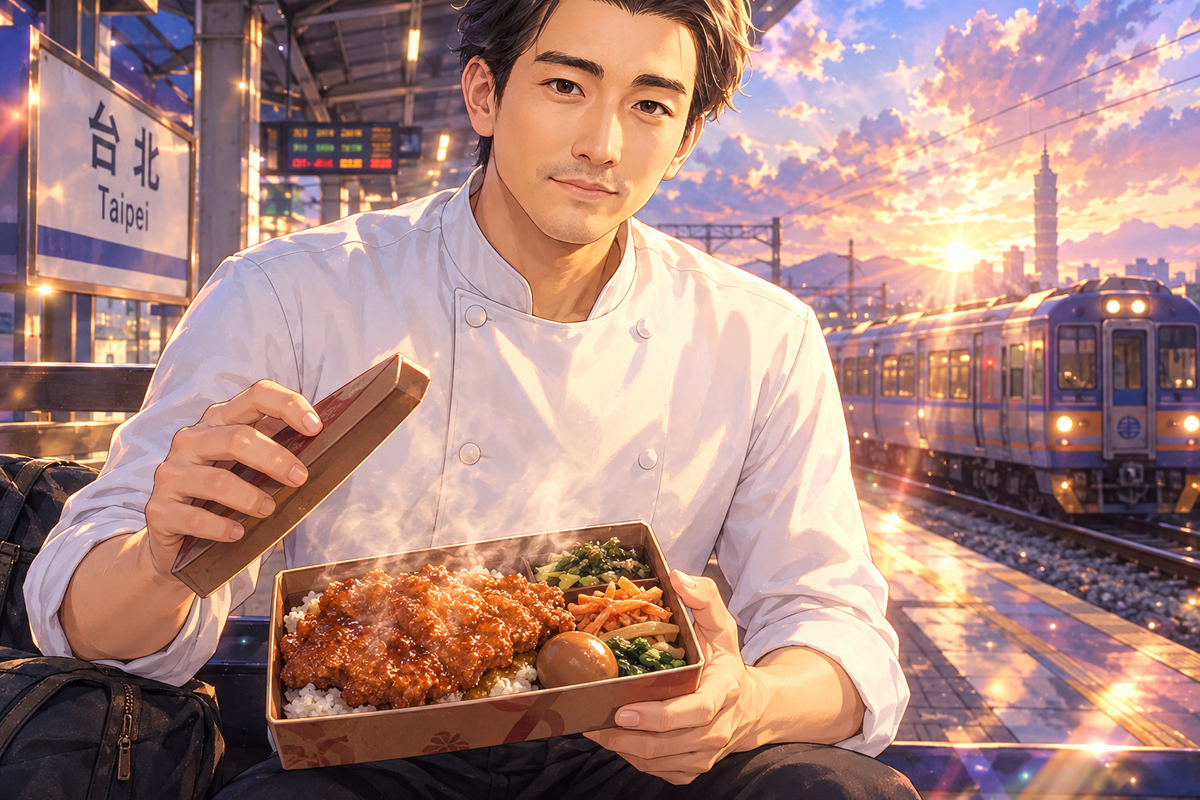
掀開盒蓋,白飯鋪底,一塊排骨斜斜壓在上面,旁邊一顆滷蛋,幾樣配菜。台鐵排骨便當的第一眼就是這個構圖:主角明確,沒有任何多餘的擺盤心思。
先炸,再滷
根據台鐵官方商品資料,這款便當的排骨先炸後滷,搭配白飯、滷蛋與配菜。順序很關鍵。炸過的肉表面酥,進了滷汁會慢慢吸飽醬色,筷子一壓,外層軟了,裡面還有肉的紋理。滷汁滲進底下的白飯,整盒的鹹香就串起來了。
這種做法的好處,開盒第一口就吃得出來:飯不乾,肉不柴,配菜負責解膩。
冷熱之間,別急著下結論
談台日鐵道飲食,常見一個切角:日本的駅弁,像幕之內這一型,常被形容為放涼了也好吃;台鐵排骨便當則多半在車站買來帶著熱氣。這個對比有畫面,也好記。
可是把它放大成「日本便當都吃冷的、台灣便當都吃熱的」,立刻站不住。日本駅弁種類繁多,有的附加熱包,有的本來就以溫熱為賣點;台灣這邊,也有乘客在車上慢慢吃到飯涼。冷熱只是觀察的角度,拿來比較兩種便當的設計重心可以,拿來替整個國家的飲食習慣下定論不行。
至於坊間流傳的說法,把台灣熱食便當歸因於傳統中醫觀念,或早期車廂沒有空調,目前沒有足夠證據撐起這條因果。好故事跑得快,查證跟不上,這類說法最好先當傳聞收著。
車站買便當的現場
今年6月在台北車站登場的鐵路便當節,為期4天,有64家業者參展,現場開賣超過80款台日特色便當,價位也拉開了:奢華木盒款賣到999元。同一個活動還邀了15家國際鐵道業者,帶來鐵道文創產品(以上依據ETtoday的報導)。
便當放進這樣的場景,吃的已經不只是飯菜,連盒子本身、包裝、聯名角色都成了購買理由。相較之下,一塊先炸後滷的排骨,配一顆滷蛋,顯得樸素到近乎倔強。
樸素也是優點。趕車的旅客不需要研究菜單,掀開盒蓋就知道盒裡是什麼。排骨壓在飯上,滷汁還在往下滲,這就夠了。
下次在月台上掀蓋,先看那塊排骨有沒有吸飽滷汁,再決定要不要等它涼一點。
— 徐政樺
Opening a TRA Pork Chop Bento: Fried, Then Braised
Lift the lid and the layout is plain: rice on the bottom, one pork chop laid at a slant, a braised egg, a few side dishes. That is the TRA pork chop bento, known in Chinese as 台鐵排骨便當, at first sight. The star is obvious and nothing is arranged for show.
Fried first, braised after
According to the official TRA product information, the pork chop is fried first and then braised, served with white rice, a braised egg and side dishes. The order matters. A fried crust goes soft as it soaks up the braising liquid, while the meat inside keeps its grain. The sauce seeps into the rice below and ties the whole box together.
The payoff shows on the first bite: rice that isn’t dry, pork that isn’t tough, sides that cut the richness.
Hot or cold: hold the conclusion
A popular framing in Taiwan–Japan railway food comparisons sets Japanese ekiben, the makunouchi type in particular, as food that tastes fine at room temperature, against Taiwan’s pork chop bento bought warm at the station. The picture is easy to remember.
Stretched into “all Japanese bento are cold and all Taiwanese bento are hot,” though, the framing collapses. Ekiben come in many varieties, and some are sold specifically for being warm. Plenty of Taiwanese passengers also end up eating their rice cold on the train. Temperature is a lens for comparing design priorities, not a verdict on a nation’s eating habits.
As for the popular claim that Taiwan’s hot-bento habit comes from traditional Chinese medicine or from early train cars lacking air conditioning, the evidence is too thin to support that causal chain. Good stories travel faster than fact-checking does, so treat it as hearsay for now.
Buying a bento at the station
The Railway Bento Festival at Taipei Main Station this June ran for 4 days with 64 exhibitors and more than 80 Taiwanese and Japanese bento styles on sale. Prices stretched up to 999 NT dollars for a luxury wooden-box set, and 15 international railway operators joined with railway merchandise (per ETtoday’s report).
In a setting like that, the box, the packaging and the character tie-ins become reasons to buy. Next to all that, a fried-then-braised pork chop with one braised egg looks almost stubbornly modest.
The modesty works. A commuter running for a train needs no menu study: lift the lid and the contents are clear. Pork on rice, sauce still sinking in. That is enough.
Next time on the platform, check whether the chop has soaked up its sauce, then decide whether to wait for it to cool.
— 徐政樺
Sources: https://www.cna.com.tw
延伸閱讀
- 新井耕吉郎紀念碑,立在一杯紅茶的源頭
- mysql2 讀 DATETIME 差 8 小時,一行 timezone: ‘Z’ 解決
- 熊走到了餐廳門口,鏡頭先看見
- 評審說蓋不出來的牆,工地用螺絲鎖住了
- 櫃檯前那句「甜度?」:一杯梅子綠茶的點餐課
https://justfly.idv.tw/s/E2kjDLA