
那個房間
台積電製造全球90%的高階AI晶片。NVIDIA、Google、Apple、AMD設計的晶片,壓倒性地依賴新竹廠房裡的光刻機台完成。2026年台積電資本支出達560億美元,2奈米製程五座廠同步量產——這個規模在半導體史上沒有先例。Stanford AI Index 2026直接點名台積電是全球AI發展最大的地緣政治脆弱點,措辭罕見地具體。
但AI的規則在哪裡被制定?倫理標準在哪裡被討論?應用框架在哪裡成形?投資決策在哪裡落地?全部在別的房間。台灣不在那個房間裡。
晶片在台灣造,AI的問題在別處被回答。台灣是被定義的對象,不是定義者。這是結構性的事實。
首爾,第一次走進去
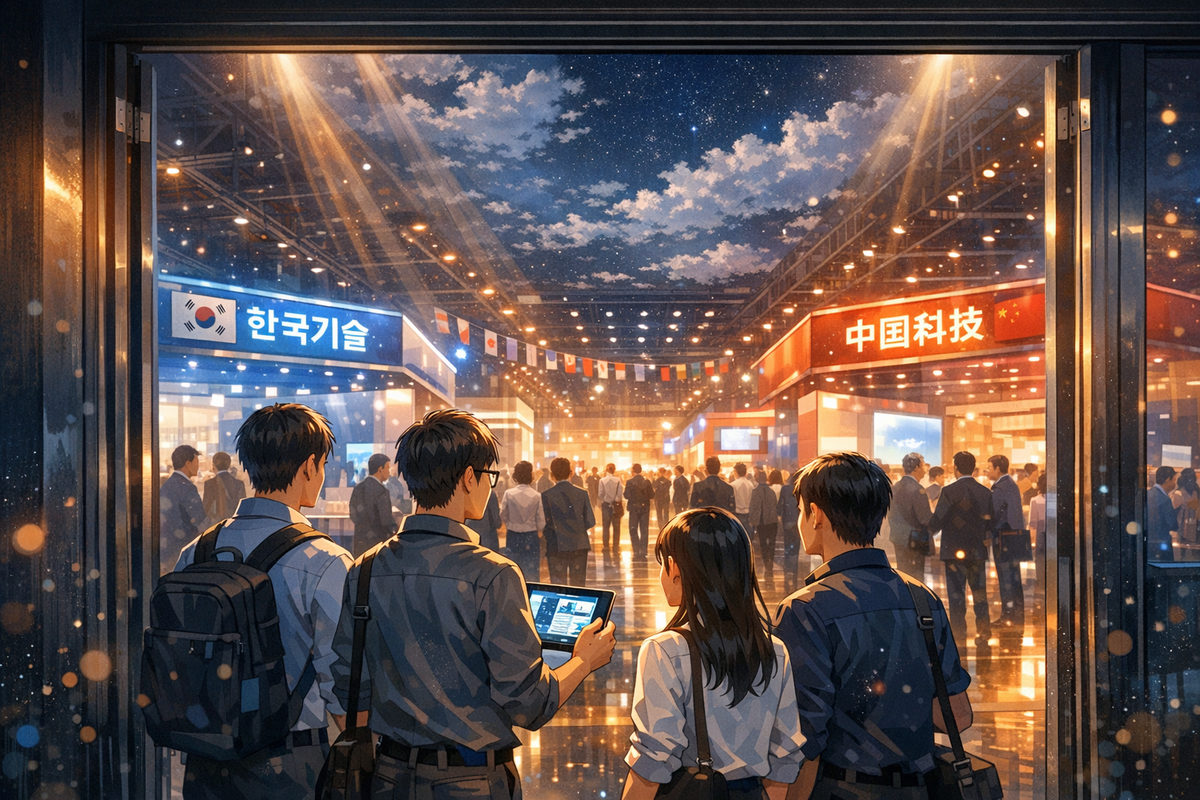
2026年,台灣首次以官方代表團身份,組16家企業赴首爾COEX參加AI EXPO KOREA。切入點是韓國市場的三個具體需求:GPU調度散熱、資料主權、製造業AI轉型。其中一家參展企業無聲實驗室帶去的AI手語服務,已在中華職棒與機場捷運落地,正在首爾尋找代理商。
這是台灣AI產業第一次試圖從「基礎設施供應商」走進「生態系參與者」的位置。第一次站進那個房間。
台韓合作軸線在國際媒體和政策圈幾乎沒有討論。台美、台日有既有的戰略敘事框架,台韓沒有。但這條軸線的互補結構比任何一條更乾淨:韓國有台灣沒有的AI應用能力、半導體設計縱深、消費電子整合經驗;台灣有韓國沒有的製造精度。產業鏈的真實空缺對上真實能力,就這樣。
投了錢,但不在房間裡
台灣不是沒有投入。Taiwan AI Academy 2018年成立,首任院長杜奕瑾曾任Google台灣MD,四年內培訓超過7,000名AI人才。政府的AI行動計畫2018至2021年投入新台幣100.7億,2021至2024年再投200億。這些數字不算小。
但投入和話語權是兩件事。七年、三百億台幣的基礎建設,造出了工程師,造出了伺服器散熱模組,造出了供應鏈節點——沒有造出在AI規則討論桌上的一個席位。
通行說法是「台灣靠半導體就夠了」。這個邏輯的盲點在於:當AI的倫理標準、應用框架、算力分配規則由別人定義完成,台灣的晶片再好,也只是執行別人規格的工具。製造者的話語權永遠比設計者、比框架制定者低一個層級。台積電控制全球72%的晶片市場份額,但這個市場份額沒有自動轉換成AI議程的話語份額。
下一個十年的那個距離
首爾COEX的展廳解決不了這個結構問題,但它標記了一個分界點:2026年之前,台灣在AI生態系的身份幾乎只有一個——供應鏈的上游。2026年之後,至少有人試著走進了那個房間。
台灣ICT產業鏈的完整度在全球罕見:從聯發科、瑞昱的晶片設計,到台積電、聯電的晶圓製造,到日月光的封裝測試,到鴻海、廣達的系統整合。這條鏈的每一個節點都在,偏偏話語權的那個節點不在鏈上。
晶片在台灣造,AI的問題繼續在別處被回答。不縮短這個距離,台灣就永遠是被定義的對象——在一個AI正在定義所有規則的世界裡。
— 邱柏宇
Taiwan Makes Every AI Chip. It Has No Seat at the Table.
The Room Where It Happens
Taiwan’s TSMC manufactures 90% of the world’s most advanced AI chips. NVIDIA, Google, Apple, AMD — all of them depend overwhelmingly on fabs in Hsinchu to bring their designs to silicon. TSMC’s 2026 capital expenditure stands at $56 billion USD, with five 2nm fabs ramping simultaneously — a scale without precedent in semiconductor history. The Stanford AI Index 2026 named TSMC explicitly as the single largest geopolitical vulnerability in global AI development.
And yet: where are AI’s rules being written? Where are ethical standards negotiated? Where do investment decisions land? Everywhere but Taiwan. Taiwan is not in that room.
This isn’t a grievance. It’s a structural fact: chips are made in Taiwan; the questions about AI are answered elsewhere. Taiwan is the defined party, not the definer.
Seoul, First Entry
In 2026, Taiwan sent its first official delegation to AI EXPO KOREA in Seoul’s COEX — 16 companies, targeting three concrete Korean market needs: GPU thermal management, data sovereignty, and manufacturing AI transformation. One of those companies, 無聲實驗室, brought an AI sign-language service already deployed in Chinese Professional Baseball League venues and airport MRT systems, looking for a Korean distributor.
The Taiwan-Korea cooperation axis gets almost no coverage in international media or policy circles. Taiwan-US and Taiwan-Japan have established strategic narrative frameworks. Taiwan-Korea doesn’t. But the complementarity here is unusually clean: Korea has AI application depth, semiconductor design breadth, and consumer electronics integration that Taiwan lacks. Taiwan has manufacturing precision Korea doesn’t have. That’s not diplomatic language — that’s real gaps meeting real capabilities.
Money Spent, Seat Not Earned
Taiwan has invested. Taiwan AI Academy was founded in 2018, with 杜奕瑾 — former Google Taiwan MD — as its first president, training over 7,000 AI professionals in four years. The government’s AI Action Plan committed NT$100.7 billion from 2018 to 2021, followed by NT$200 billion in the 2021–2024 cycle.
Investment and influence are different things. Seven years of AI infrastructure spending produced engineers, server thermal components, and supply chain nodes — not a seat at the table where AI rules are set. The standard argument is that Taiwan’s semiconductor dominance is enough. The flaw in that logic: when AI ethics standards, application frameworks, and compute allocation rules are finalized by others, Taiwan’s chips — however advanced — execute someone else’s specifications. TSMC controls 72% of the global chip market. That market share has not automatically converted into a proportional share of AI agenda-setting.
The Distance to Close
A trade expo floor in Seoul doesn’t resolve this structural problem. But it marks a dividing line. Before 2026, Taiwan’s identity in the AI ecosystem was almost entirely singular: upstream supplier. After 2026, at least someone walked into the room.
Taiwan’s ICT chain is unusually complete — chip design from MediaTek and Realtek, wafer fabrication from TSMC and UMC, packaging and testing from ASE Group, systems integration from Hon Hai and Quanta. Every node on that chain exists. The node for shaping AI discourse does not.
Chips made in Taiwan. AI questions answered elsewhere. That gap is the distance Taiwan has to close in the next decade — not out of sentiment, but because the cost of not closing it is permanent object status in a world where AI defines the rules of everything else.
— 邱柏宇
延伸閱讀
https://justfly.idv.tw/s/46WymvX