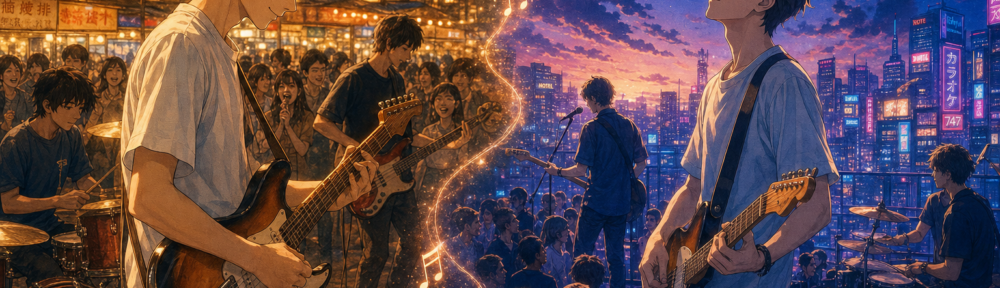
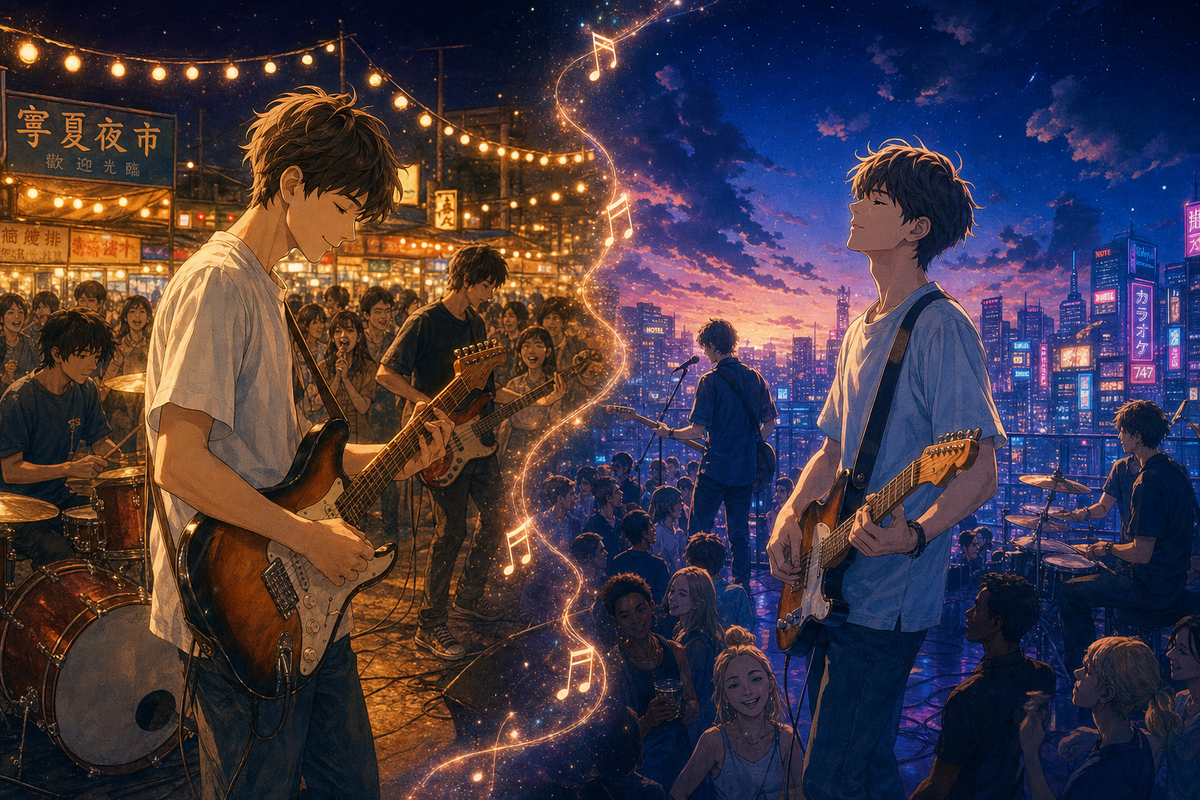
基隆一間車庫裡練團,跟東京、洛杉磯的展演場館掛上同一個名字——這中間隔的不是距離,是十幾年的累積。落日飛車走完這段路,蘇打綠走的是另一條路,兩條路現在都通到同一個詞:IP。
樂團養成有點像沖一杯手沖咖啡,前面十分鐘悶蒸看不出所以然,決定味道的其實是後段的注水節奏。台灣獨立音樂前面二十年在悶蒸,現在到了看節奏的時候。
廣度那條路
蘇打綠從獨立樂團一路走到品牌授權、跨界合作滿天飛,已經是台灣樂團IP化的教科書等級案例。教科書的意思是——套路被驗證過,別人可以照抄一部分,但抄不走的是時間堆出來的文化認同厚度。這條路走的是本土廣度,音樂變成一種可以被辨認、被引用、被貼上「這就是台灣」標籤的語言。廣度型IP的難處不在紅不紅,在能不能被無數次重新包裝還留著原本的辨識度。
深度那條路
落日飛車的路線完全不同。從基隆的車庫走到跨國city pop旗艦IP的位置,吸引的是日本、北美、東南亞好幾個世代的城市青年。這批聽眾聽不懂中文歌詞也沒關係,city pop這種曲風本身帶著城市情緒的通用語法——夜色、公路、微醺、一點寂寞。落日飛車做的事情,是把台灣製造的音樂語言,嵌進一種跨語言、跨國界都認得的情緒模板裡。這條路窄,但走通了就是全球通行證。
兩條路殊途
廣度打的是「這是我們的」,深度打的是「這種心情我也有」。前者靠認同感召集人群,後者靠情緒共鳴打穿語言邊界。有意思的地方在於,兩支樂團都沒有刻意規劃「要做IP」,IP化是被市場、被跨界合作、被一次次曝光機會推著長出來的結果,不是先畫藍圖再照做的產物。台灣市場不大,但城市青年的情緒需求全球都在漲,音樂只是先卡到那個位置的載體。
市場會不會繼續往這個方向選台灣,牽涉的因素從來不只一個——市場成熟度、通路、文化接受度都算數,音樂人本身願不願意把作品放進商業框架裡經營也算。蘇打綠跟落日飛車證明的不是「台灣音樂天下無敵」,是這條從獨立樂團升格成IP系統的路,台灣走過兩種版本,而且都走得通。
— 黃冠霖
Taiwan’s Indie Bands Have Outgrown the Question of Audience Size
A Garage in Keelung, a Stage in Tokyo
Practicing in a garage in Keelung and headlining venues in Tokyo or Los Angeles under the same name — the gap between those two points isn’t geography. It’s over a decade of accumulation. Sunset Rollercoaster made that trip. Sodagreen took a different route. Both routes now arrive at the same word: IP.
Growing a band works a little like pour-over coffee. The first few minutes of bloom look like nothing’s happening. What decides the flavor is the pacing that comes after. Taiwan’s indie scene spent its first couple of decades in that bloom phase. It’s now in the pacing part.
The Breadth Route
Sodagreen moved from indie band to a textbook case of licensing deals and cross-industry collaborations — the reference point for turning a Mandarin-language indie band into commercial IP. Textbook means the playbook has been tested; others can copy pieces of it, but what can’t be copied is the thickness of cultural identity built up over time. This is the breadth path — music that becomes a language people recognize, quote, and tag as unmistakably local. The hard part of breadth-type IP isn’t popularity. It’s staying recognizable through endless repackaging.
The Depth Route
Sunset Rollercoaster went somewhere else entirely. From a Keelung garage to flagship status in the global city pop revival, pulling in generations of urban listeners across Japan, North America, and Southeast Asia. Audiences who don’t understand the Mandarin lyrics don’t need to — city pop carries its own grammar of urban feeling: night driving, neon, a little loneliness after a drink. What Sunset Rollercoaster did was slot a Taiwan-made musical language into an emotional template that already reads across borders and languages. That path is narrower. But once it opens, it’s a global pass.
Two Roads, No Blueprint
Breadth sells “this is ours.” Depth sells “I feel this too.” One rallies people through identity, the other cuts through language barriers with emotional resonance. Neither band appears to have set out with an explicit plan to “become IP” — the IP status grew out of market pressure, cross-industry deals, and repeated exposure, not a blueprint drawn up in advance. Taiwan’s domestic market is small, but global demand for urban emotional content keeps climbing, and music just happened to be the vehicle that got there first.
Whether this pattern keeps pointing toward Taiwan involves more than one factor — market maturity, distribution, cultural receptiveness, and whether musicians themselves are willing to build commercial frameworks around their work. What Sodagreen and Sunset Rollercoaster prove isn’t that Taiwanese music beats everyone else. It’s that the road from indie band to IP system has at least two working versions, and Taiwan has walked both.
— 黃冠霖
延伸閱讀
- 赤峰街小店搬去承德路,那杯咖啡的味道會留下嗎
- 大洲臥龍山莊以外:一張和紙,把台灣策展人帶進城下町
- 台鐵排骨便當開盒:先炸後滷的那一塊肉
- 新井耕吉郎紀念碑,立在一杯紅茶的源頭
- mysql2 讀 DATETIME 差 8 小時,一行 timezone: ‘Z’ 解決
https://justfly.idv.tw/s/zc9USyb