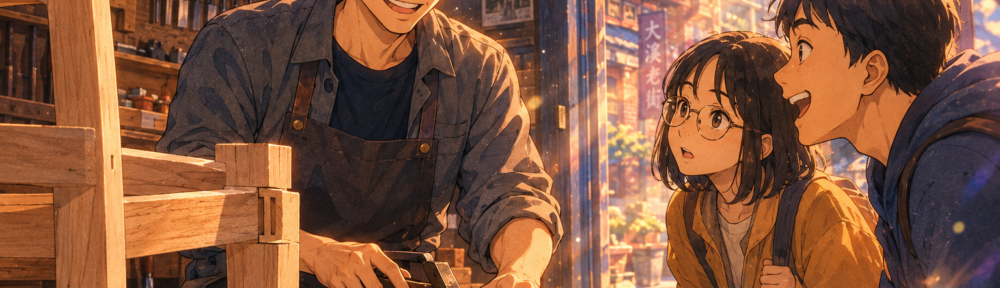

2026大溪工藝週從10月31日開跑,到11月8日收尾。木工進一間陌生工場,眼睛通常不先看成品。牆上的鑿子掛成什麼順序先看,工作台上留著哪幾把鉋、哪幾把鑿再看,最後才輪到那張椅子。工具怎麼擺,比成品更早透露這間工場平常怎麼做事。
第一週的重點,剛好是這種看法。官方預告10月31日至11月1日串連38處大溪在地工藝職人、工藝據點及店家,其中11處是期間限定的打開工場,另有3條「打開工場」路線,可以挑不同主題去看木作現場。數字要說清楚:38處是職人、據點與店家的合計,11處才是限定開放的工場,不能一口氣唸成「三十八間工坊」。
邊角料先上台
記者會上的啟動裝置叫「工藝小匠」,由和峰木創李汪達、堂和神桌黃裕凰、隆達傢俱林繼達三位木藝師合作,用的是家具製作過程留下的邊角料,不同木料互相堆疊、彼此支撐。
這個選材很內行。工場裡最誠實的東西是角落那一箱切剩的料,展示櫃反倒其次。切剩的料是留下來做小件,還是直接當柴燒,每家工場做法不同,開放的工場裡正好可以當面問。大溪的神桌、傢俱、木器工場把這一箱端上台面,本身就是一次開場示範。
一個榫,兩種生活
公會堂那邊,第一週另有北海道東川町9家木工坊的家具展售交流。東川町以「君の椅子」計畫聞名:鎮內工坊為在東川町出生、出生時在町內設籍且持續居住的孩子,製作一張刻上名字與生日的木椅;需由家長申請,與出生申報一起送件。一張椅子,是一個人的第一件家具。
把兩地硬塞進同一個「木作美學」,兩邊都吃虧。比較有意思的看法是拆開來看:椅腿和座面之間怎麼接,是用榫卯咬死,還是靠楔子、膠與螺絲取捨;手邊最常握的是鉋還是鑿;一張椅子預設擺在榻榻米旁、餐桌邊,還是神明廳前。接合方式裡藏著一戶人家怎麼過日子,工場開放,正好能親眼對照。
具體誰在現場示範、示範什麼,官方新聞稿沒有逐一列出,報名項目也請依各活動公告為準。這篇不替還沒發生的現場寫感想。
第二週換成器物
11月6日至8日轉向國際交流。「城市工藝─國際主題館」有日本益子町、加賀市、會津若松市、兵庫縣及砥部町共22個工藝品牌;工藝市集則有全台30家工藝品牌。官方整體的說法是31個來自日本的家具與工藝品牌,這三個口徑各算各的,加起來沒有意義。
桃園市立大溪木藝生態博物館的開放時間是週二至週日 09:30~17:00;普濟路11號後棟2樓是館方的聯絡處,不是工藝週各場館與工場的集合地點,各活動地點與交通請以官方交通指南與活動公告為準。第一週走工場、第二週看器物的行程,不妨多看幾眼接合處。榫頭的鬆緊,用眼睛看、開口問職人,比伸手去摸更妥當;展品未經允許別碰。
— 曾柏宇
Daxi Craft Week Opens the Workshop Doors
Daxi Craft Week 2026 runs from October 31 to November 8. A woodworker walking into an unfamiliar shop rarely looks at the finished piece first. The order of chisels on the wall comes first, then which planes and chisels are left out on the bench. The chair comes last. How the tools are kept says something about how the shop works day to day, before any finished piece does.
The first weekend invites exactly that kind of looking. The announcement says October 31 to November 1 links 38 local craftspeople, craft sites and shops in Daxi, 11 of them temporary open workshops, with three “Open Workshop” routes to choose from. Mind the counting: 38 is the total of craftspeople, sites and shops. Only 11 are limited-time open workshops. It is not “38 workshops.”
Offcuts go on stage first
The launch installation, called “Craft Little Maker” (工藝小匠), was built by three Daxi woodworkers: Li Wangda of Hefeng Mu Chuang, Huang Yuhuang of Tanghe Shentai, and Lin Jida of Longda Furniture. The material is offcuts left over from furniture making, stacked so the different woods hold each other up.
That is a knowing choice. The most honest thing in any shop is the box of cut-off scraps in the corner. Whether cut-offs are kept for small work or go to the stove differs from shop to shop, and an open workshop is the place to ask. Showing that box in public is an opening demonstration of its own.
One joint, two ways of living
At the Daxi Public Hall, the first weekend also brings a showing of furniture from nine woodworking studios from Higashikawa, Hokkaido. The town is known for its “Kimi no Isu” (Your Chair) program: workshops in town make a wooden chair, engraved with name and birth date, for children born in Higashikawa who are registered as residents there at birth and continue to live there. Parents apply for it, filed together with the birth registration. A chair is a person’s first piece of furniture.
Squeezing the two places into one “wood aesthetic” shortchanges both. A better way is to take them apart: how the leg meets the seat, whether it is locked with a mortise and tenon or settled with wedges, glue and screws; which tool sits closest to the hand, the plane or the chisel; whether the chair is meant for beside a tatami mat, a dining table, or in front of a household altar. A joint carries how a household lives, and an open workshop lets a visitor compare in person.
Who will demonstrate what is not itemized in the official release, and sign-ups follow each event’s own announcement. This piece does not describe a scene that has not happened yet.
The second weekend turns to objects
November 6 to 8 turns to international exchange. The “City Crafts – International Pavilion” brings 22 craft brands from Mashiko, Kaga, Aizuwakamatsu, Hyogo Prefecture and Tobe, while the craft market gathers 30 brands from across Taiwan. The organizers’ overall count is 31 Japanese furniture and craft brands. These are three separate tallies, and adding them together means nothing.
The Taoyuan Daxi Wood Art Ecomuseum is open Tuesday to Sunday, 09:30 to 17:00. The rear building, 2F, No. 11 Puji Road is the museum’s contact office, not a meeting point for the Craft Week venues and workshops; check the official access guide and each event’s announcement for locations. Anyone walking the workshops in week one might look twice at the joints. How snug a tenon sits is better judged by looking, and by asking the maker, than by touch; leave the exhibits alone unless invited.
— 曾柏宇
延伸閱讀
- 金蘋果樂園 1.20.6,差 10 秒就三星的那一下
- 夢幻湖到海邊,母蟹要過一條馬路
- 《看見幻貓又何妨》:觀眾座位換成一隻貓
- 六本木藝術之夜 2026:同一排警示燈,三種看法
- 車埕貯木池一天撈走400尾外來魚,真正的收穫是那張體重表
https://justfly.idv.tw/s/NT8CL12