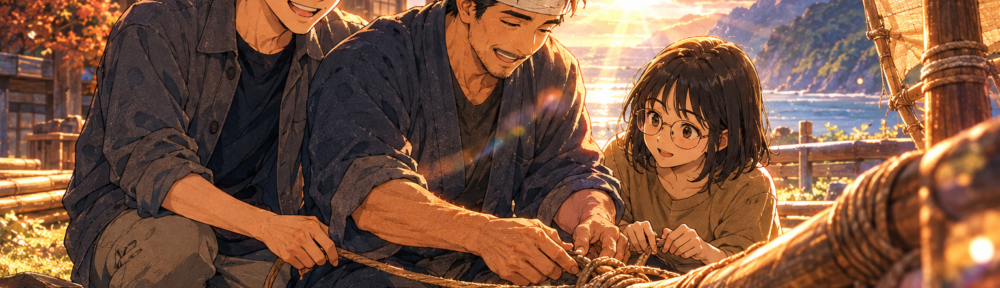
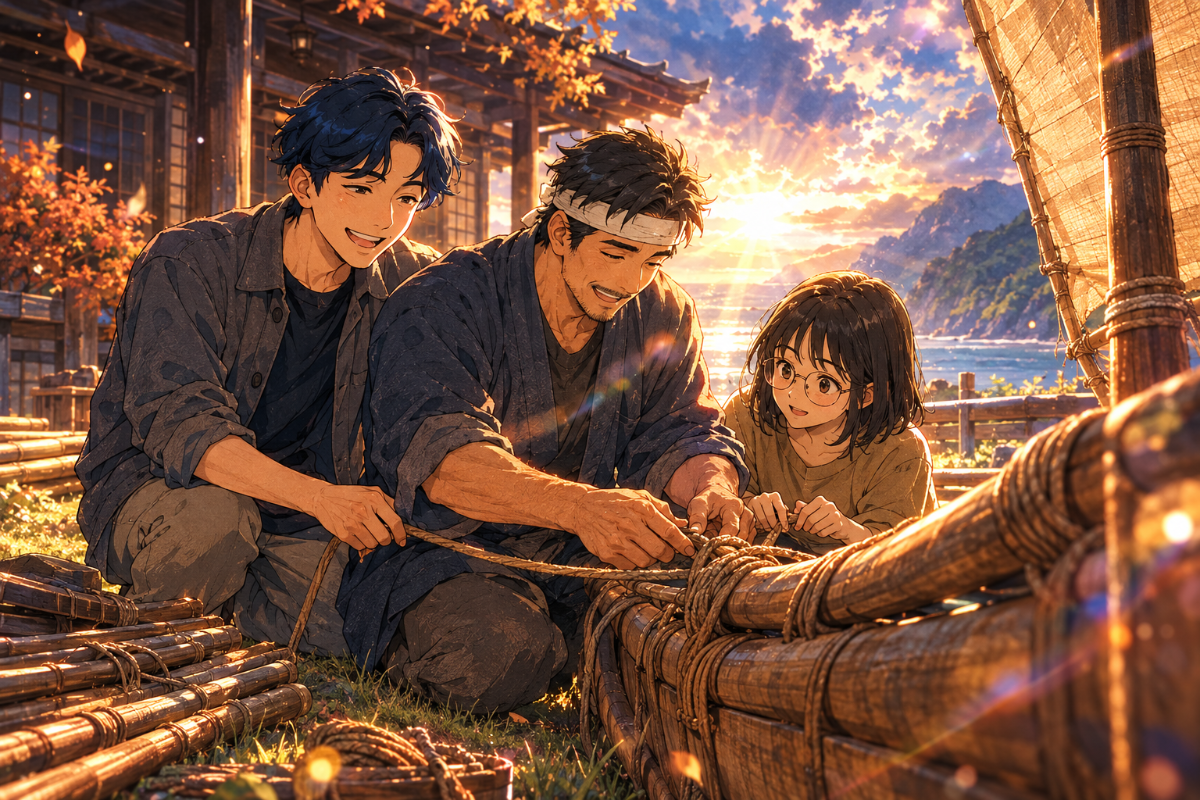
花蓮市松園別館的前庭擺著一艘傳統竹帆船。這場松園別館展覽叫《用藝術說自然的話-森川里海藝術創生成果展》,10月30日開幕,展期到11月22日。船沒出海,停在草地上,從港口部落林清進頭目帶著三個部落的中生代與青年,一路做到現在。
船是先從山裡開始的
官方新聞稿的說法很樸素:運用竹、藤及山芙蓉等材料,「從取材、處理到綁船,一步步重拾傳統技藝」。這句話的順序值得木工看第二遍。取材在前,綁船在後。
做過木作的人都知道,料沒挑對,後面的手藝全是白工。竹子哪一支能用,砍了怎麼處理,藤要怎麼備,這些沒有圖紙,靠的是有人在旁邊說「這支不行」。一艘船的成敗,大半在綁之前就決定了。展場上看得到的是成品,真正難傳的是前面那幾步:站在竹叢前,判斷眼前這一支值不值得砍。
報導沒有交代具體工序,也沒有列出參與者名單,這些細節得等主辦單位或部落自己說。能確定的只有結構:三個部落、兩個世代、三種材料、一條從山到船的順序。
一個結要綁多少次,才算學會
竹和藤做的船,靠的是繩結而不是釘子。釘子錯了可以拔,結綁鬆了,要拆開整段重來。青年第一次上手,手指記不住,長輩在旁邊看一眼就知道哪裡會鬆。這種知識沒辦法抄筆記,只能用手換手。
這也是中生代夾在中間的位置有意思的地方。報導點名的是「中生代與青年」,沒有說耆老親自綁。中間這一代接過手、又要往下遞,兩頭的話都得聽懂。跨世代的傳承在這裡不是口號,是一條繩子從一雙手傳到另一雙手的長度。
五個部落參展,不等於五個部落一起造船
這場展覽集結豐濱鄉磯崎、新社、復興、貓公與港口五個部落,但造船的是港口部落帶領的三個。其他部落做的是別的事:復興部落的耆老與藝術家共創繪本,並與馬來西亞生態廚師Pison Jaujip研發月桃味噌醬、辣椒醬與糖漿;貓公部落的陶藝結合礦泥染,做成顏料盤;港口國小學童把耆老的鳥類知識做成動畫。各做各的,湊在同一個展場,別混成一件事。
船也還沒證明什麼。沒出海,就沒有航行成績,也沒有任何經濟效益可以講。眼前有的是一艘綁好的船,和一群正在學怎麼綁的人。
展期還剩不到三週,另有手作工作坊與部落文化旅行,場次與開放時段要以主辦單位公告為準。官方新聞稿寫得很清楚:船還沒出海。11月22日展期結束後,這艘船會停在哪裡,新聞稿沒說。
— 曾柏宇
A Bamboo Sailing Boat at Songyuan Pavilion, Not Yet at Sea
In the front courtyard of Songyuan Pavilion in Hualien City sits a traditional bamboo sailing boat. It is part of the Songyuan Pavilion exhibition 《用藝術說自然的話-森川里海藝術創生成果展》, which opened on October 30 and runs to November 22. The boat has not been to sea. It sits on the grass, the work of the middle generation and youth of three tribes, led by 林清進, the Gangkou tribe’s chieftain.
The boat starts in the mountains
The official release is plain about it: using bamboo, rattan and 山芙蓉 (hibiscus), the tradition is relearned step by step, from gathering the materials to processing them to lashing the boat. A carpenter reads that order twice. Gathering comes first, lashing last.
Anyone who has worked wood knows that bad stock wastes every skill that follows. Which culm is usable, how it is treated after cutting, how the rattan is prepared: none of this comes with drawings. It comes from someone standing beside the worker saying “not that one.” Most of a boat’s fate is settled before a single lash is tied. What visitors see is the finished hull. What is hard to pass on is the earlier steps, standing at a bamboo grove and judging whether one particular stalk deserves to be cut.
The coverage names no specific procedures and lists no participants. Those details have to come from the organizers or the tribes themselves. What is established is the structure: three tribes, two generations, three materials, and a sequence from mountain to boat.
How many times must a knot be tied
A boat of bamboo and rattan holds together by knots, not nails. A wrong nail can be pulled. A loose lashing means undoing the whole run. A young person’s fingers do not remember on the first try, and an elder watching needs one glance to see where it will slip. That kind of knowledge cannot be copied from notes. It moves hand to hand.
It also explains the position of the middle generation. The release says “middle generation and youth,” not elders doing the lashing. The middle generation received the skill and has to hand it on, so both sides’ words have to be understood. Here, passing knowledge across generations is not a slogan. It is the length of one rope moving from one pair of hands to another.
Five tribes exhibiting is not five tribes building a boat
The exhibition gathers five tribes of Fengbin Township: Qixian, Xinshe, Fuxing, Maogong and Gangkou. The boat belongs to the three led from Gangkou. The others are doing other things. At Fuxing, elders and an artist made a picture book, and the tribe worked with Malaysian eco-chef Pison Jaujip on 月桃 miso, chili sauce and syrup. At Maogong, ceramics met mineral-mud dyeing in a pigment palette. Gangkou Elementary pupils turned an elder’s bird knowledge into an animation. Same hall, separate projects. They should not be blended into one story.
Nor has the boat proved anything yet. No voyage, so no sailing record and no economic result to report. What exists is one lashed boat and a group of people still learning how to lash.
Fewer than three weeks of the run remain, with workshops and tribal cultural trips planned; sessions and opening hours should be checked with the organizers. The official release says it clearly: the boat has not gone to sea. Where it will rest after November 22, the release does not say.
— 曾柏宇
延伸閱讀
- 石頭在呼吸 花蓮:13公尺的巨石,其實是一袋空氣
- 金蘋果樂園 1.21.0,朋友家門口可以插木牌了
- 模型上那個洞,對準了中央公園
- 哈古木雕:漂流木不是材料,是部落的柴火
- 特富野古道2K+700:一塊石頭怎麼放穩
https://justfly.idv.tw/s/Az3BS4f