
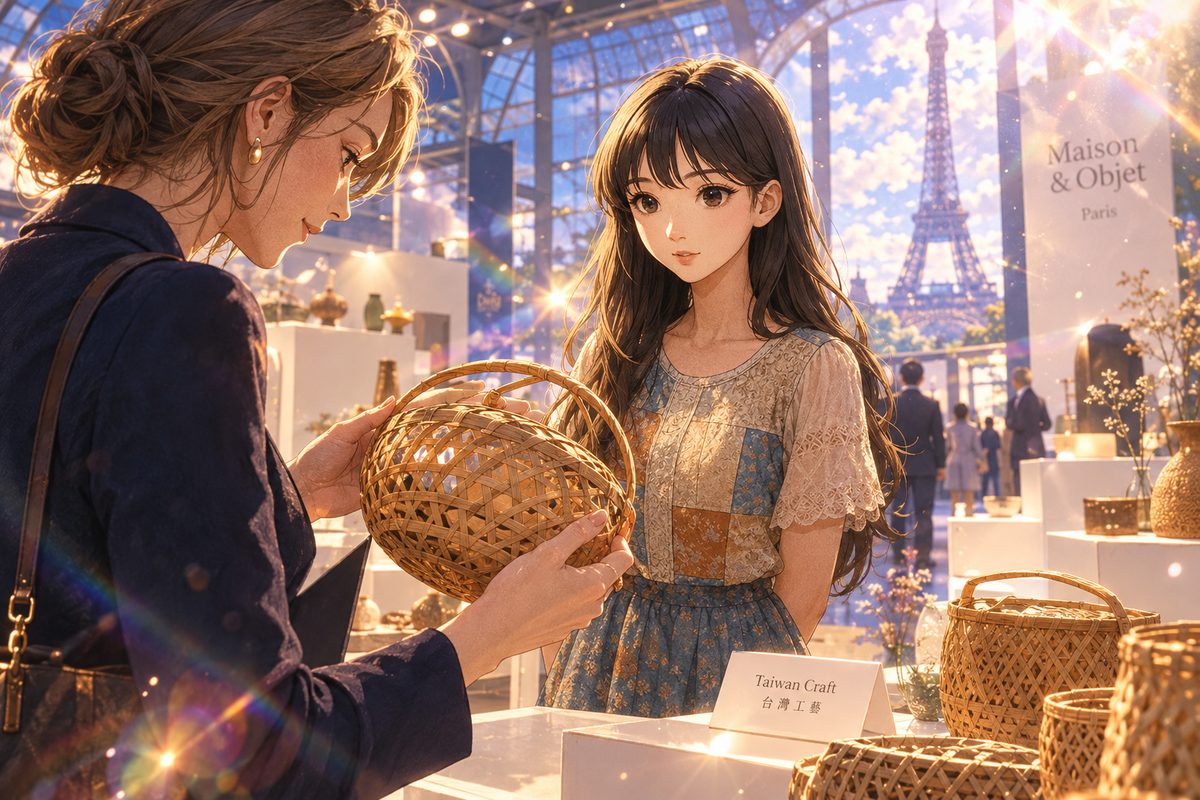
竹片還帶著苗栗工坊的溫度,下一秒就攤在巴黎展廳的白色展台上,被一位歐洲買手的手指捏起、翻面、放下。這個動作只花三秒,卻決定一件東西接下來是被歸進「紀念品」還是「當代設計」。台灣工藝研究發展中心(NTCRI)這回帶著七個台灣品牌回到 Maison&Objet,這場歐洲居家生活風格展是全球買手每年例行報到的採購現場,攤位不大,審視的眼光很尖。
策展邏輯寫得很直白:老東西新詮、東方靈魂西方體。翻成白話,就是把一件本來活在博物館或民俗文物櫃裡的東西,重新剪裁成一個西方客廳擺得下去的形狀。這不是新鮮發明,日本、北歐的工藝品牌早就這樣做了幾十年,差別在於,這次輪到台灣的工坊被放上同一張審查桌。
展廳裡真正被看的是什麼
買手和策展人在展場上做的事,說穿了是一套資格審查:這件東西撐不撐得起被全球居家美學收編的條件。竹編、陶藝、漆藝這些工法本身在台灣並不稀奇,山裡、廟口、老街隨處可見。稀奇的是把它們的紋理、比例、材質語彙翻譯成國際買手看得懂的設計詞彙——不只是換個包裝盒,連造型邏輯都要重新想過。一件器物原本為了盛裝食物、供奉神明而存在,現在要證明自己能單獨站在一張北歐風餐桌中央,這中間隔著整套審美系統的轉譯工程。
台灣不是第一個嘗試這條路的地方,也不會是最後一個。這類國際採購展的邏輯,對哪個地方的工藝品都一樣殘酷:手感和敘事只是入場券,能不能真的被買回家,還得看價格、量產可行性、跟現有家飾風格搭不搭。工藝師在苗栗工坊裡想的是紋路和手感,站上巴黎展台後,面對的問題全部換了一批。
誰在冒險,誰在觀望
把一件老工藝品送進國際設計展,對做的人來說其實是一場賭注。展前不知道自己做的東西會不會被翻白眼略過,展後也不確定買手拿在手上那三秒鐘,心裡跑過的是「這很有意思」還是「這不是我要的貨」。這種懸而未決的感覺,比起任何一句「文化輸出成功」的官方新聞稿都更接近真實現場。
這次帶隊回到 Maison&Objet 的七個台灣品牌,某種程度上是把工藝從「地方文化財」重新定義成「可流通的設計商品」的一次集體嘗試。這個轉換能不能成立,不是靠展場一次曝光決定,得看接下來有沒有回頭客、有沒有第二次、第三次被同一個買手記住。市場埋不埋單,牽涉的因素很多——歐洲家飾市場本身的消費週期、通路願不願意冒險上架一個陌生產地的手工品、還有工坊端撐不撐得住小批量訂單的成本結構。這些都不是一句「東方美學獨步全球」就能跳過的關卡。
展廳的燈光會熄,攤位會拆。留下來的問題只有一個:那件被翻面又放下的竹編,下一次出現,會是在巴黎某間選物店的貨架上,還是回到苗栗工坊的樣品櫃裡,繼續等下一場展。
— 游曉芬
What It Takes for a Miaoli Bamboo Basket to Reach a Paris Buyer’s Hands
The bamboo still carries the warmth of the Miaoli workshop when it lands on a white pedestal in a Paris exhibition hall, picked up by a European buyer’s fingers, turned over, set back down. Three seconds decide whether the object gets filed under “souvenir” or “contemporary design.” Taiwan’s craft research body, NTCRI, brought seven Taiwan brands back to Maison&Objet, the lifestyle trade fair where global buyers do their annual rounds. The booths are modest. The scrutiny is not.
The curatorial pitch is blunt: old objects, new interpretation — an Eastern soul in a Western body. Plainly put, an object that used to live in a museum case or a folk-craft shelf gets reshaped to fit into a Western living room. Nothing new here — Japanese and Nordic craft brands have run this playbook for decades. What’s different is that Taiwan’s workshops are now sitting at the same review table.
What actually gets judged on the floor
What buyers and curators do on the fair floor is a qualification test: does this object hold up to being absorbed into global home aesthetics. Bamboo weaving, ceramics, lacquerware are nothing exotic inside Taiwan — they show up in mountain villages, temple courtyards, old streets. What’s harder is translating their texture, proportion, and material vocabulary into a design language international buyers already read fluently. That’s not a repackaging job. It means rethinking the form logic itself. An object once meant to hold food or sit on a temple altar now has to prove it can stand alone on a Scandinavian-style dining table. The gap isn’t distance — it’s a full aesthetic translation project.
Taiwan isn’t the first place to try this route, and won’t be the last. The logic of this kind of trade fair is equally unforgiving anywhere: craftsmanship and story get through the door, but whether the object actually goes home with a buyer depends on price, whether it scales, and whether it fits existing home-decor trends. A craftsperson in a Miaoli workshop thinks about grain and texture. Standing on a Paris fair floor, the questions change completely.
Who’s betting, who’s watching
Sending an old craft object into an international design fair is a bet for the maker. Before the fair, there’s no telling whether the piece gets glanced over. After, there’s no telling whether those three seconds in a buyer’s hands meant “interesting” or “not what I’m sourcing.” That unresolved feeling sits closer to the real story than any press release declaring cultural export a success.
The seven Taiwan brands returning to Maison&Objet amount to a collective attempt at redefining craft — from “regional cultural asset” to “sellable design good.” Whether that redefinition holds won’t be settled by one fair appearance. It depends on repeat buyers, on being remembered a second and third time. Whether the market bites involves a mix of factors — the consumption cycle of Europe’s home goods market, whether retailers are willing to stock handmade work from an unfamiliar origin, whether small workshops can sustain the cost structure of small-batch orders. None of that gets settled by a claim that Eastern aesthetics simply win.
The fair lights go off eventually. Booths get dismantled. One question remains: does that woven basket, turned over and set back down, next show up on a shelf in a Paris concept store, or back in a sample cabinet in Miaoli, waiting for the next fair.
— 游曉芬
延伸閱讀
https://justfly.idv.tw/s/vriX7cJ