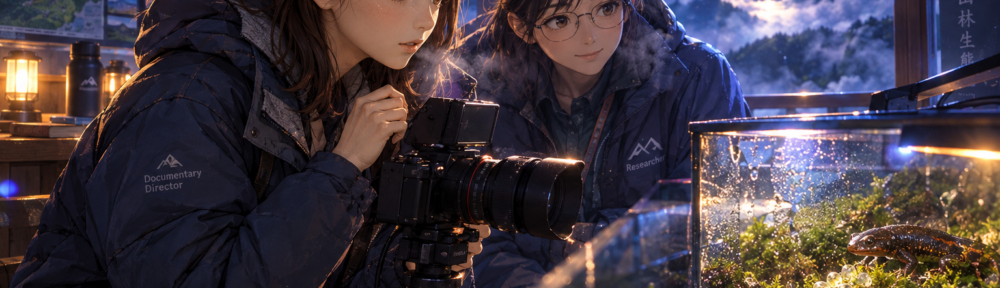
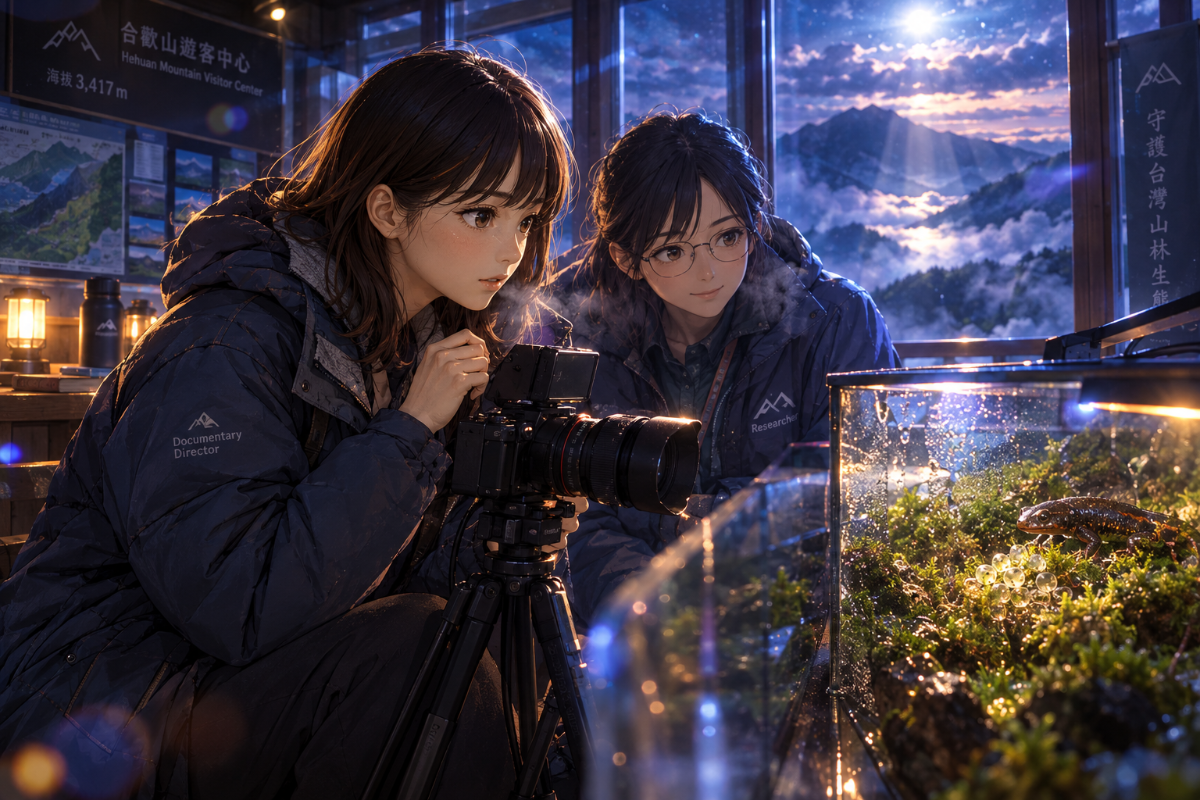
海拔 2,610 公尺,冬夜的氣溫常常掉到零度以下。塔塔加遊客中心裡,一只人工觀察箱前坐著人,鏡頭開著,等的是一隻阿里山山椒魚守著卵串。這個畫面沒有任何追逐、沒有任何驚險,只有等。
玉山國家公園管理處在 11 月 6 日發布公告:《雲嶺間的靜默信使:阿里山山椒魚繁殖之謎》在 2026 年「野生動物保育影展」(Wildlife Conservation Film Festival, WCFF)拿下教育類第三名。獎項是新聞,等待才是這部片的內容。
看不見的產房
阿里山山椒魚 1921 年由日本學者首次在阿里山地區發現。牠把卵產在地下伏流水中,人眼看不到,鏡頭更進不去。自由時報的報導也提到,正因這個習性,繁殖行為極不易觀察。
一部生態片最難拍的,往往是「沒有畫面」的那段。野外的山椒魚在伏流裡做了什麼,從日治時期到現在都沒有人完整看過。2008 年,圓峰樣區發現卵串,成為全臺灣野外觀察的首次紀錄;但發現卵串,和看見親代怎麼護、幼體怎麼孵,是兩件事。
2020 年起,玉管處請臺大朱有田教授團隊模擬塔塔加的棲地,做人工圈養觀察。拍攝的位置,就是從這裡出現的:觀察箱。
鏡頭前後,誰做什麼
2024 年,玉管處委託零壹媒體創意有限公司,林音導演帶隊開拍。公告寫得很具體:朱有田教授研究團隊與拍攝團隊克服極端寒冷與長時間夜間守候的體能考驗,在人工觀察箱前不間斷記錄,取得護卵、孵化到變態發育的影像。全片 22 分鐘,2025 年完成。
紀錄片行內人看這段,注意的是分工。審稿的有呂光洋名譽教授與林春富副研究員,幼體的微距影像來自朱有田教授,攝影技術指導由元利儀器股份有限公司提供。公告列出的是各自負責的環節,不是誰輪哪一班:研究團隊與拍攝團隊一起守候,審稿、幼體微距影像、攝影技術指導各有來源。
國家公園署長王成機在公告中表示,署內從 2023 年成立以來,積極落實「Team國家公園、連結臺灣、行銷世界」目標;公告也提到,山椒魚研究與保育推動上,有台灣大哥大基金會合作導入 AIoT,以及致茂電子公司與國票金控集團等企業的資金支持。(來源:玉管處 11 月 6 日公告)
人工箱裡的真實,要標清楚
需要說清楚的是:這批影像來自人工觀察箱,不是野外伏流的完整實錄。玉管處公告稱之為臺灣首筆完整影像,並說這是全球首度完整呈現該物種生命歷程的影像;這兩個說法,依玉管處公告原文如此記載。
同樣要分開看的還有科技。公告提到與台灣大哥大基金會合作,導入 AIoT 即時數據傳輸技術。那是研究與監測的工具,不是替片子「生成」任何生物影像,也不代表野外繁殖已經成功。圈養箱的經驗,公告的說法是能為未來野外繁殖棲地的保育提供資訊。這句話用的是「未來」。
觀眾拿到的是一份誠實的禮物:一種平時躲在地下的山椒魚,在箱子裡完整走過一輪生活史。這已經夠稀罕,不必再替它加戲。
想看,去塔塔加
片子目前在玉管處各遊客中心的視聽室放映,塔塔加遊客中心同時辦著《微笑精靈~阿里山山椒魚特展》。放映時間依各遊客中心當日公告為準。
公告給的數字是 22 分鐘的紀錄片,和一句「冬季夜間溫度常降至零度以下」。想看,就挑個白天進塔塔加遊客中心的視聽室坐下來。
— 鄭佩玲
Waiting in the Cold for the Salamander’s Nursery
At 2,610 meters, winter nights at Tataka often fall below freezing. In the visitor center, a person sits in front of an artificial observation tank with the camera running, waiting for an Alishan salamander to guard its egg strings. There is no chase and no drama in the frame. There is only the waiting.
On November 6, Yushan National Park Headquarters announced that its short film 《雲嶺間的靜默信使:阿里山山椒魚繁殖之謎》 took third place in the education category at the 2026 Wildlife Conservation Film Festival (WCFF). The award is the news. The waiting is the film.
The Nursery No One Can See
The Alishan salamander (阿里山山椒魚) was first recorded by a Japanese scholar in the Alishan area in 1921. It lays its eggs in underground seep water, out of sight of human eyes and out of reach of cameras. The Liberty Times report notes that this habit is exactly why its breeding is so hard to observe.
The hardest part of a wildlife film is often the part with no pictures. What salamanders do in those underground flows has never been fully seen since the Japanese colonial period. In 2008, egg strings were found at the Yuanfeng plot, the first wild observation in Taiwan. But finding egg strings is one thing, and watching parents guard them and larvae hatch is another.
From 2020, the park commissioned Professor Chu Yu-tien’s team at National Taiwan University to run captive observation in a simulated Tataka habitat. The camera position came from there: the tank.
Who Did What Behind the Camera
In 2024 the park commissioned 零壹媒體創意有限公司, with director Lin Yin leading the crew. The announcement is specific: Professor Chu’s research team and the film crew overcame extreme cold and long night vigils, recording continuously in front of the tank, and captured egg guarding, hatching and metamorphosis. The film runs 22 minutes and was finished in 2025.
A documentary maker reads the division of labor in that story. Emeritus Professor Lü Kuang-yang and associate researcher Lin Chun-fu reviewed the script, Professor Chu supplied the larval macro footage, and 元利儀器股份有限公司 provided technical guidance on wildlife photography. The announcement lists who handled which part: researchers and crew keeping the vigil together, with separate sources for the script review, the larval macro footage and the photography guidance. It does not say who took which shift.
Director-General Wang Cheng-chi of the National Parks Service says in the announcement that the service has worked since its founding in 2023 to carry out the goal “Team National Parks, connecting Taiwan, marketing to the world” (translated from the Chinese). The announcement also says the salamander work involved the Taiwan Mobile Foundation (AIoT data transmission) and funding from Chroma ATE and the Ticket Financial Holdings group. (Source: Yushan park announcement, November 6)
Be Clear About the Tank
One thing has to be said plainly: these images come from an artificial observation tank. They are not a complete record of the wild underground habitat. The park’s announcement calls it Taiwan’s first complete footage, and says it is the world’s first complete portrayal of the species’ life history. Both claims are as stated in the park’s announcement.
The same caution applies to technology. The announcement mentions a partnership with the Taiwan Mobile Foundation to bring in AIoT real-time data transmission. That is a research and monitoring tool. It did not generate any footage of animals, and it does not mean breeding in the wild has succeeded. The announcement says the captive-breeding experience can offer information for conserving future wild breeding habitat. The word it uses is future.
What the audience gets is an honest gift: a hynobiid salamander that normally hides underground, shown completing a full life cycle in a tank. That is rare enough without adding drama.
To See It, Go to Tataka
The film is shown in the audiovisual rooms of the park’s visitor centers, and the Tataka Visitor Center is currently running the exhibition 《微笑精靈~阿里山山椒魚特展》. Showtimes follow each visitor center’s notice on the day.
The announcement gives two numbers for this documentary: 22 minutes of film, and winter night temperatures that often fall below freezing. If you go, pick a daytime visit and sit down in the Tataka Visitor Center’s audiovisual room.
— 鄭佩玲
延伸閱讀
https://justfly.idv.tw/s/yGyA1Mt