
觀光客看到的,和制度設計者看到的,是兩件事
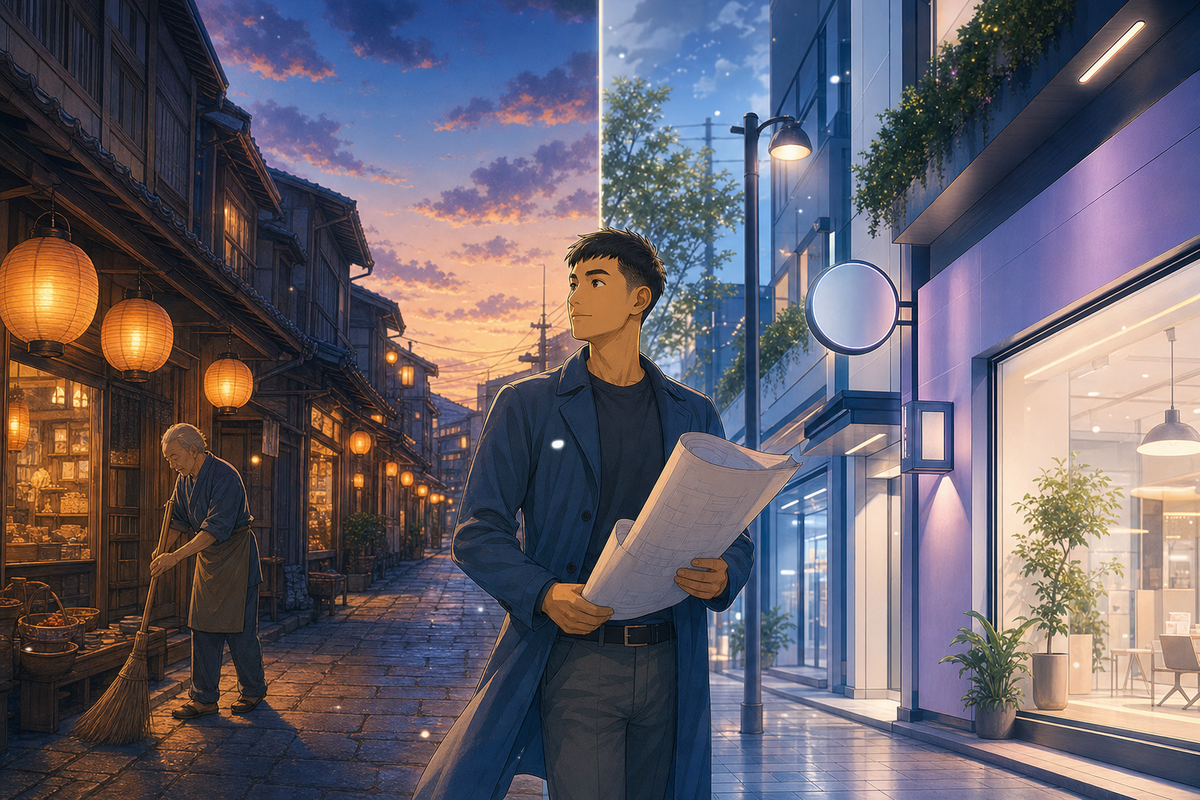
走進京都的商店街,或者金澤的東山茶屋街,直覺告訴訪客這裡「有味道」。招牌不花俏,店家開門時間隨性,巷子裡偶爾聽到居民在曬衣服。觀光客會說這叫「生活感」,然後拍下一張IG照回家。
但讓那個生活感得以存在的機制,跟「美學」幾乎沒有關係。
2026年8月18日,經濟部商業發展署攜手台灣設計研究院,在台北文創舉辦「2026臺日商圈交流論壇」,發布《商圈持續發展關鍵要素》研究報告。報告以台灣10處商圈為樣本,並邀請4位日本地方營造專家深度交流,其中包含日本流通科技大學長坂泰之教授。報告結論簡單,但刺眼:台灣商圈的活化邏輯,和日本根本不是同一種動物。
日本的路徑:從景觀改善到社區自主
日本商店街的演進,有一條清晰的時間軸。早期靠景觀改善——換招牌、鋪石板路、做路燈。接著是活動行銷——夏祭、市集、限定商品。但這兩個階段,在很多台灣商圈改造案裡也出現過,而且還做得更漂亮。
差距在第三個階段:地域關係人共同參與的區域經營。個店活化、街區講座、在地組織主導決策,政府退到輔助位置。這不是美學選擇,是治理結構的轉變。店主知道為什麼要維持那個招牌尺寸,因為是店主自己投票決定的。
這套自主治理慢,複製也慢。一個新的地域組織要取得居民信任,通常要花數年時間。這是日本模式的代價,也是護城河。
台灣的路徑:設計思維加上外部賦能
台灣做商圈改造的邏輯,是把設計能量從外部導入。公私協力的框架下,外部專業團隊帶著視覺系統、品牌識別、空間規劃進場,在短時間內讓一條街看起來煥然一新。這是台灣的強項——執行速度快,美學品質高,政府補助的資源流向清晰。
問題是,當計畫案結束、設計團隊撤場,那條街的居民不一定知道該怎麼維持那套系統。招牌改了,但決策機制沒有建立。空間美化了,但在地組織的自治能力沒有跟著長出來。
台灣設計師寫企劃書的能力頂尖,但那是為了申請補助。日本商店街的幹部寫提案,是為了說服自己的鄰居。動機結構完全不同。
兩種哲學,各自回答不同的問題
如果問「怎麼讓一條街在明年看起來很有特色」,台灣模式效率更高。如果問「怎麼讓一條街二十年後還在」,日本模式的答案更穩。
這份研究報告歸納的5大核心主軸——治理與組織、市場與品牌、空間與環境、數位與資料、政策與制度——把「治理與組織」放在第一位,不是沒有原因的。沒有在地組織的自治能力,其餘四項都是外力撐起來的棚架,風一吹就需要重新搭。
大稻埕的某些街屋活化案,算是台灣版本裡少數走出「設計賦能」框架的嘗試。歷史建築本身形成了天然的進入門檻,迫使進駐的店家必須理解空間脈絡,而非只是選一個租金便宜的場地。但這是地理與歷史條件造就的例外,不是可以系統複製的路徑。
論壇上,日本地方營造專家帶來的不只是成功案例,是一個讓台灣側感到不舒服的問題:台灣的商圈組織,有沒有能力在沒有政府補助的情況下,自己做出決策、並且承擔後果?
這個問題,現在沒有答案。
— 李明翰
What Feels Like Charm Is Actually Governance
Two Visitors, Two Things Seen
A tourist walks through a Japanese shopping street and calls it “charming.” An urban consultant walks through the same street and calls it a governance structure. Both are correct, but only one of them understands why it works.
On August 18, 2026, Taiwan’s Department of Commerce and the Taiwan Design Research Institute co-hosted the “2026 Taiwan-Japan Commercial District Exchange Forum” at Taipei Huashan. The event released a research report on key factors for sustainable commercial district development, drawing on samples from 10 commercial districts across Taiwan and bringing in four Japanese community development specialists — including Professor Nagasaka Yasuyuki of the Japan University of Distribution Sciences. The report’s central finding: Taiwan and Japan are running different operating systems underneath streets that can look similar from the outside.
The Japanese Path: From Façade to Self-Governance
Japanese shopping streets didn’t arrive at their current character through aesthetics alone. The trajectory moves through three recognizable stages: landscape improvement, then event marketing, then something harder — what the research calls “co-participation of regional stakeholders in district management.” Individual shop activation, neighborhood workshops, local organizations leading decisions while government steps back to a supporting role.
The result is that a shop owner knows why the signage regulations exist because the shop owner voted on them. The speed at which this develops is slow. Building genuine trust within a local organization typically takes years. That’s the cost of the Japanese model. It’s also why it doesn’t collapse when the subsidy cycle ends.
The Taiwan Path: Design Injection, External Expertise
Taiwan’s commercial district renewal logic runs in the opposite direction. External professional teams arrive with visual systems, brand identities, and spatial plans. A street gets transformed quickly. The aesthetic quality is often high. The government funding pipeline is clear and well-managed. Taiwan executes fast.
The gap appears after the project closes. When the design team leaves, the residents don’t necessarily know how to maintain the system. Signage was redesigned, but decision-making capacity was not built. Spaces were improved, but local self-governance didn’t grow alongside them.
The report places “governance and organization” first among its five core axes — ahead of market, space, digital, and policy dimensions. That ordering is a judgment call, not a coincidence. Without local organizational capacity, the other four dimensions are scaffolding held up by external force.
Different Models Answer Different Questions
If the question is “how do a street look distinctive next year,” Taiwan’s model is more efficient. If the question is “how do a street stay alive in twenty years,” Japan’s answer is more durable. Neither is universally right. Both reflect different institutional cultures and different assumptions about where agency should sit.
The harder question the forum raised — whether Taiwan’s commercial district organizations could make their own decisions and absorb the consequences without government subsidy — is one that doesn’t have a clean answer yet. The 2026 forum documented the gap. Closing it is a different kind of project.
— 李明翰
延伸閱讀
https://justfly.idv.tw/s/FHzFdwN